I’m blogging from the Bexley Monk in Columbus, Ohio having just finished a three day intern supervisor training event at Trinity Seminary. The Monk, formerly the Blind Monk, was the hangout of choice in my seminary days. A few of us considered the Monk an extension of the classroom and at a corner table would preside over animated conversations on all things theological. Of course I couldn’t afford the Monk in those days and and so moderation was the only option. The other hangout of choice was the Leipzig House, which was well within my budget and then some. Unlike the Monk the “Zig” was the local “I’ve Got Friends in Low Places” (Garth Brooks) sort of place. While I didn’t “pastor up” back then I bet I wouldn’t look so out of place at the Monk, while I might raise some eyebrows at the Zig. Paul has the same problem with Peter who formerly went where no Jew had gone before but now under pressure has changed his behavior, if not his mind. At the heart of Paul’s accusation of hypocrisy, against the Rock upon which Christ promised to build his church no less, is the question of what makes one right with God. Jews sought justification by religiously obeying the 613 laws in the Torah. Paul sees justification in the invitation to die with Christ which is an invitation to die to any attempt to justify oneself. It is the invitation to be crucified with Christ that calls us to speak the Gospel where people might raise their eyebrows so that one day the rest of their bodies might follow suit. I suppose that means I have to leave my comfy chair at the Monk and go play pool at the Zig, even if I’m “Texas-ed up” (wearing burnt orange) and could be crucified for real in Columbus Ohio. Hook em Horns!
Wednesday, June 9, 2010
Tuesday, June 8, 2010
Pentecost 3c - Psalm 32
Silence is golden, unless you have something you need to say. The psalmist, which in the way of the psalms is always meant to be whoever happens to be reading the psalm, is wasting away one night at a time. You’ve been there, or maybe still are. You toss and turn waking every hour on the hour as things said or left unsaid replay in your head on a continuous loop. A sleepless night is followed by an endless day until back in bed it starts all over again. Maybe you’ve also been in that place where sick and tired of being sick and tired you come clean and tell the truth and determine to do what you always knew you had to do but didn’t have the will or the courage or the desire or the help to begin. Of course that makes it sound so simple when it is often only by bit and bridle and living “many are the torments of the wicked” that one tells the truth and acknowledges sin to oneself, to the Lord, and here’s the hard part, to someone else who loving us will not abandon us to more of the same. It is why we are called to be in community and if we weren’t always putting on a happy face and pretending as if everything is fine and I’m okay, really I am, we might take advantage of what the church was always meant to be; a hiding place where no one hides.
Monday, June 7, 2010
Pentecost 3c - 2nd Samuel 11:26 - 12:15
2 Samuel 11:26 - 12:15
“Each one is tempted when, by one’s own evil desire, one is dragged away and enticed. Then, after desire has conceived, it gives birth to sin; and sin, when it is full-grown, gives birth to death.” (James 1:14-15) David is not bewitched by Bathsheba’s beauty but consumed by his own evil desire and when his desire conceives he compounds it by killing Uriah. The story that leads up to Nathan’s “you are the man” details David’s desperation to hide his deceit. If Uriah had been more like David and slept with Bathsheba the plan would have succeeded. Of course sooner or later someone would have noticed that Uriah’s boy looked a lot like the King. But when the righteous will not cooperate with evil schemes the only solution is to kill the righteous one. Nathan sent by the Lord is given the unenviable task of speaking truth to power which is why he comes through the back door and tells a story of injustice before identifying David as the villain. That David can become so incensed at Nathan’s story of a rich man taking a poor man’s only lamb and not connect the dots speaks of sin’s power of self deception. David, a man after God’s own heart has broken God’s heart and in continuing to live as if nothing happened David is as dead as Uriah. That power to deceive self is why the accusation “you are the man” which sounds like judgment is actually good news for David for though the he suffers the penalty of sin he is restored to life. It is so for us when Nathans sent by the Lord tell the truth about our infidelity, for all sin is unfaithfulness towards God. In the naming of our sin the Word that forgives is found for the One who was more righteous than Uriah, whose heart melted like wax within him as he hung upon the cross, recreates in us a clean heart and renews within us a right spirit.
Friday, June 4, 2010
Pentecost 2c - Conclusion
1 Kings 17:17-24; Psalm 30; Galatians 1:11-24; Luke 7:11-17
All the lessons for Pentecost 2c have happy endings. God hears Elijah’s “Let this child live” and brings the boy back. The psalmist weeping through the night wearing sackcloth is clothed with joy come the morning. Paul the persecutor of the church is chosen by God to proclaim the faith. The young man of Nain hears Jesus’ command to rise and sits up surprising everyone, including himself no doubt. While happy endings are never arrived at easily or quickly the life of faith anticipates the ending on every page of the story. That’s the gift Mil and Lillian and Phyllis give to those of us who have more pages left to turn. It’s always been that way. Joined with the cloud of witnesses who by lived by faith, sure of what they hoped for and confident in what they did not see, they now know fully and see face to face. Each of them in their own way and with the gifts God gave them make our stories more faith-filled by the way they lived theirs. There is no greater tribute than that. Well done, good and faithful servants.
Thursday, June 3, 2010
Pentecost 2c - Luke 7:11-17
Miracle at Nain by Mario Minniti (1577-1640)
Luke 7:11-17Two parades meet in the city of Nain. One led by Jesus. The other by a weeping widow. The Jesus parade, having just witnessed the healing of the Centurion’s servant, is following with anticipation expecting something from the prophet from Nazareth who never disappoints. The widow’s parade loudly wailing anticipates nothing as the widow’s only hope is borne lifeless on a bier. The parades meet in the gate where one will have to give way to the other. One might expect the Jesus parade to step aside and show some respect but the prophet from Nazareth filled with compassion will have none of that. “Do not weep” means the widow’s parade is the one that will step aside and when the son sits up the two parades become one because the prophet from Nazareth never disappoints.
My father called yesterday with news that a dear family friend, Phyllis Lucht, died suddenly. She was one who walked her whole life in Jesus’ parade, a kind, generous, compassionate and faithful Christian woman who I remember as always smiling or laughing, filled with the joy of the Lord. While the Lucht family and we who loved Phyllis will walk for a time in the widow’s parade, Jesus met Phyllis in the gate and as she anticipated her whole life the prophet from Nazareth, Jesus her Lord, her Savior, did not disappoint. As it is now true for Phyllis may it be so for us when one day we meet Jesus in the gate of death and he tells us to rise to eternal light and love and life.
Wednesday, June 2, 2010
Pentecost 2c - Galatians 1:11-24
I’ve been writing Living the Lectionary from Roots Coffeehouse in North Richland Hills since December 2009 because it’s close to my son Joshua’s school, they’re not a chain so the coffee is more interesting and the Wi-Fi is free. But now Starbucks offers two hours of free internet access if you purchase and register a SB card. Yes, I know that means it’s not technically free, but with school out for summer and an SB on every corner of the planet who cares if their coffee is only a step or two above McDonalds? So with apologies to the folks at Roots, I’m afraid I’ll be blogging this summer from a comfy chair in a satellite of the corporate coffee empire. You don’t have to like the apostle Paul to appreciate what the Lord accomplished through him. Truth is he seems to be rather full of himself for one who will admit elsewhere to being the least of the apostles. That being said it was God who did the choosing and scripture would seem to support the idea that God chooses those who otherwise would be less than acceptable or dare I say left behind. Moses, reluctant and slow of speech, is chosen to speak for I AM. David the youngest brother from the smallest tribe is chosen to be king and although an adulterer and murderer is a man after God’s own heart. Mary of Magdalene, once possessed by seven demons is set free to become the apostle to the apostles, "I have seen the Lord." And Paul, the persecutor of a charismatic but insignificant Jewish sect, is the one whose work and writings birth the church into the Gentile world to change it forever.
Tuesday, June 1, 2010
Pentecost 2c - Psalm 30
Mil Anderson, a now gone to glory member of Calvary, was working in a field hospital on the beaches of Normandy six days after the allied landings. Six months later she was evacuated from Bastogne as the Battle of the Bugle began. Once the tide began to turn she followed the allied advance caring for the wounded and dying often within hearing of the front. A slight but feisty woman she reminded me of my grandmother Lillian Smith who was cut from the same cloth. Coping with adversity, hardship and loss, they did their praying silently and endured patiently whatever was their lot. At the same time, living within the constraints of their era, they pushed back against the boundaries imposed upon them and made it possible for the daughters of our time to achieve more than the women of the greatest generation could have hoped for or even imagined. The psalmist crying out for help to God is clothed in healing with answered prayer. The joy of the morning is known by living through the weeping of the night. Life is brought forth from the experience of going down to the Pit. Dancing springs forth from sackcloth, rejoicing follows grief. Mil and Lillian, and so many like them, lived the movement of this psalm and made strong as a mountain by faith in the Lord, inspire us all to do the same.
Monday, May 31, 2010
Pentecost 2c - 1 Kings 17:8-24
When I was 11 my family visited the American military cemetery at Colleville-sur-Mer which sits on the bluffs above D-Day’s Omaha beach. It was a beautiful sunny day in 1968 and all I wanted to do was explore the remaining WWII fortifications and play solider with my brother. I was stopped by the sight of row upon row of perfectly aligned white marble crosses that seemed to go on forever. It is a painfully beautiful sight where conversation, if any, is held in hushed tones as if talking any louder would dishonor the dead. I can’t say for certain but I think even an 11 year old boy might have been moved to tears on such sacred ground. The widow weeping gives her only son to the prophet whose presence she assumes has led to his death. “What do you have against me, O man of God?” The prophet is equally pained and questions the intention of the One for whom he speaks. Why, O Lord, have you killed the widow’s son? I imagine not a few of the 9,387 who lie above the beach, or the 1,557 never found, whose names etched in the stone colonnade are all that remain, had mothers like the widow who wept their questions, “Why?” or like the prophet accused God of less than holy intentions. No doubt the mothers of the 21,222 Germans at La Cambe, asked the same question. Elijah stretched out three times on the breath-less body of the widow’s son and the Lord restored his life so that returned to his mother she believed the truth; life is stronger than death. The lifeless body of the Lord, stretched out three days in the darkness of death, burst forth from the tomb so that one day those slain in the course of human conflict might be revived and know the truth; life is stronger than death. When at last the nations learn to study war no more and death is swallowed up in victory those who wait in the silent sleep of death at places like Colleville-sur-Mer and La Cambe will meet again, not as brothers in arms, but as brothers in the arms the Lord.
Friday, May 28, 2010
The Feast of the Holy Trinity - Conclusion
Proverbs 8:1-4; 22-31; Psalm 8; Romans 5:1-11; John 16:12-15
I was doing a Google search to find an image for today’s blog when I happened upon the Holy Trinity I know well and understand completely. Mirepoix, the Holy Trinity of sauces and soups, 2 parts onion, 1 part carrot, 1 part celery, the foundational flavor of all things French. Sautéed or roasted, the three become one and everything that follows is built on the base of the Mirepoix. Since I’ve avoided simple analogies to explain the mystery of the Trinity I’m going to resist comparing Father Son Spirit to Onion Carrot Celery. However, as the foundation for sauces that celebrate life the Mirepoix isn’t a bad image of what the Infinite Imagination had in mind when uttering “Let there be…” brought forth all there is. In Proverbs Father Son Spirit, the foundation upon which everything is built, rejoices in the inhabited world and delights in humanity. In Psalm 8 the majestic name above all the earth mindful of mortals crowns them with glory and honor. In Romans the love of God poured into human hearts through the One who dies to turn enemies into friends makes it possible for suffering endured to produce a hope that does not disappoint. And finally Holy Breath creating something from nothing makes possible the vision of the future, the finished product if you will, a vast multitude of every race and tongue and tribe singing as one. In the meantime we anticipate the first taste of the feast when through acts of love and lives that are “winsome and compelling” we get down to dicing onions, carrots and celery. Whew! A whole week of Trinity talk and not a heretical thought in the lot which is good because the Bishop is reading the blog!
Thursday, May 27, 2010
The Feast of the Holy Trinity - John 16:12-15
John 16:12-15
Someone asked me recently when the Holy Ghost disappeared and the Holy Spirit appeared. I’m not sure when but I know why. In Hebrew the word attached to the third person of the Trinity is Ruach, in Greek Pneuma or breath. Spirit seems to capture that idea better than Ghost, but Holy Breath might be better. In the beginning Holy Breath hovered over the chaos and called forth the creation. Holy Breath animated humans formed from dust. Holy Breath inspired words in the mouth of the prophets to convict and correct so that the vision of redemption and return could be realized. Holy Breath cried in a stable and on a hill. Holy Breath stepped out of the darkness of death and through locked doors to breathe on disciples hiding in fear and confusion. On the day when the waiting came to an end Holy Breath like the rush of a wind spoke through fisher folk and tax collectors in languages unlearned. To this day Holy Breath breathed scripture (2 Timothy 3:16) “calls, gathers, enlightens, sanctifies and keeps us in the one true faith.” (Luther) And wherever and wherever the one holy catholic (small c = universal, invisible) and apostolic church steps into and lives out of the truth as guided by Holy Breath, the Father Son Spirit is glorified.
Wednesday, May 26, 2010
The Feast of the Holy Trinity - Romans 5:1-11
The second article of the faith tells the story of the One not created who was before time began and yet chose to let go of glory and empty himself to be found in human likeness. This is where the Trinity gets tricky and the creeds only state the "what" leaving humans to figure out the "how", which is where we get into trouble. But if the unbroken unity of the Trinity is love for the children of creation then Father Son Spirit are equally engaged in the work of redemption, though it would appear that the Son does the heavy lifting. In the person of Jesus the One uncreated becomes weak to save the weak, becomes sin to save sinners, and surrendering his life forgives his enemies. The image of an angry God now appeased by a human sacrifice, albeit God in human flesh, is not what Paul means by being saved from the wrath of God, for God’s love is proved by the death of Christ and wrath and love cannot coexist. God is the only actor on the stage of salvation. While we were ungodly, while we were weak, while we were sinners, while we were God’s enemies, God died for us, ahead of us, instead of us so that by the life of God the love of God might be poured into our hearts through the Spirit. This One in Three and Three in One, Father Son Spirit, dwelling within us produces hope that does not disappoint by enduring suffering and reflecting the character of Christ, which is love.
Tuesday, May 25, 2010
The Feast of the Holy Trinity - Psalm 8
Psalm 8
The unity of Father Son Spirit cannot be divided and yet each member while fully present in the other is also distinct. Attempting to say something about each One in Three, while preserving the Three in each One is a tip toe through the tulips of heresy, but I will press on, gingerly! In the time before time began the One who was not created called forth the heavens and the earth setting the stars like jewels in the crown of space. From infinite imagination the One who was not created called forth living things weaving them together with the fabric of the earth. And when all was said and done and very good the One who was not created formed in the image of the infinite imagination a creature both beautiful and terrible. Given our drive to exercise dominion over all things, including the One who imagined us, God might be mindful of mortals for God’s own sake. That might not be so far from the truth. The first article of the faith names the One who created the heavens and the earth as God, the Father Almighty. It is the parent in the infinite imagination that is mindful of the children created in the image of God. Love for the child will move that same One who was not created to inhabit mortal flesh and be crowned with glory and honor, not in the heavens but on a cross on a hill. Love for the child will move that same One who was not created to inspire the mouths of babes and infants and the young and the old to sing Alleluia when the enemy and the avenger, death itself, is swallowed up in victory. The One in Three and Three in One bound together by love for the children both beautiful and terrible until and for the day when the children of the infinite imagination are reborn into the eternal future.
Monday, May 24, 2010
The Feast of the Holy Trinity - Proverbs 8:1-4; 22-31
This Sunday is the Feast of the Holy Trinity and wisdom would be wise to advise us to say as little as possible about the mystery that defies definition. Or if we are so bold to attempt an analogy we should preface everything we say with St. Paul’s word picture of the temporal peering into the eternal, “Now we see but a poor reflection as in a mirror…” or the words of Job after God showed up. “I’ve spoken of things too great for me to understand.” That doesn’t mean there isn’t something to say, only that an analogy easily understood will always be a poor reflection of the definitive truth. Like a joke that has to be explained it loses something in the translation. So the best thing to be said is that the unity of the Trinity is not to be explained to the human mind but believed in the human heart. What we are to believe is that the unity of the Trinity is the ultimate expression love. In the creative unity of love Father Son Spirit calls forth from nothing all that is and it is very good. In the redeeming unity of love Father Son Spirit dies for the created whose lust for creator status turned the goodness of creation into something less. In the sustaining unity of love Father Son Spirit rejoicing in the inhabited world and delighting in the human race continually recreates us so that the goodness of God’s creation, light and love, might overcome the darkness and death of human design. Father Son Spirit is the Unity of Love beyond knowing except our knowing it is all we need to be holy and whole.
Friday, May 21, 2010
The Feast of Pentecost - Conclusion
Acts 2:1-21; Psalm 104; Romans 8:14-17; John 14:8-17, 25-27
There are some weeks when these blogs come easily and other weeks, like this one, when they don’t. It did seem ironic that it should be so difficult on the week of Pentecost when one might expect the Spirit to show up without much effort on the part of the blogger. But true to the day of Pentecost the Spirit’s arrival always surprises. The disciples waiting for weeks are blown away by the wind of the Spirit and lit up by tongues of fire they speak like drunks but without the slurred speech. God surprises us, and most of all Doris Lakota, by determining Monday afternoon to be the day when by the Spirit sent forth she is recreated in the eternal future and renewed like the face of the earth. The Roman Christians, and all who familiar with suffering wait for redemption with the whole creation, find strength and courage in the hope that not seen is none-the-less anticipated and believed. And finally in the Gospel Philip asks to see what he couldn’t imagine even though the answer was right in front of his face “If you have seen me…” Surprise!
Thursday, May 20, 2010
The Feast of Pentecost - John 14:8-27
Years ago I had one of those moments when I desperately wanted a clear word from the Lord. Nothing seemed to be working. Not prayer or conversations with colleagues or time in silent meditation. I don’t recommend what I did next because I think it treats the scripture like a Christian version of the Magic 8 ball®, but desperate times called for desperate measures and so I opened my Bible at random and landed on John 14:9. “Have I been with you all this time, Philip, and you still don’t know me?” That’s the other reason not to do it. God might use your name and when God has to use your name you know you haven’t been paying attention. Philip asks the question that is on everyone’s mind and though it sounds like a rebuke Jesus honors the question and shows Philip what he asks to see. It is in the person of Jesus that the mystery of the Holy One is made known. And even if the humanity of John’s Jesus plays second fiddle to his divinity Jesus is for Philip and the disciples a present, physical reality that can be seen. It is Judas (notably not Iscariot) who asks the question for us who have not seen and yet long to believe. It is in keeping the word from Jesus’ own lips, “Love one another” that God is made known. The Holy, Invisible, God Only Wise revealed in kindness offered, in mercy shown, in comfort extended, in generosity sown in the name of Jesus. In that we become the answer to someone’s desperate prayer - ask anything in my name. God made visible in love. In the same way that the internal unity of Father, Son, Spirit cannot be separated, so we too cannot be separated from the love of God in Christ Jesus our Lord. No longer alone without a home like those who have been orphaned, the good news for us is that even if God’s answer sounds like a rebuke, God uses our name because we are known.
Wednesday, May 19, 2010
The Feast of Pentecost - Romans 8:12-25
Romans 8:12-25
The first readers of Romans never thought the creation would still be waiting 2000 years later to be set free from its bondage to decay. Given the weight of the human foot print in 2010 it may be waiting more eagerly than ever. According to Genesis it was human rebellion that subjected the creation to frustration and the ground of the garden where only good things grew was cursed so that only painful toil produced fruit. Paul imagines a day of redemption where the curse of the fall is reversed and the whole creation rejoices in the homecoming of the prodigal human race welcomed by a waiting Abba. Which is why the very real sufferings of the first readers of Romans were not worth comparing with the glory to be revealed. That is not meant to minimize suffering but only put it in the proper perspective. In all our trials and tribulations, in our suffering and hardship, in our sorrow and pain, we too eagerly long for redemption, groaning inwardly, but not as those who have no hope. And what might be our brightest and best hope? Isaiah saw it and it sustained him while he suffered slavery in Babylon. The Assyrian lion lies down with the lamb of Judah, swords and spears are beaten into plow shares and pruning hooks, and people of every tribe and tongue sit down to feast together as God dines on death. I consider whatever I have to face today or any day not worth comparing with what I believe will one day be true for you and me and all people. And if on any given day I wait impatiently, groaning outwardly, complaining and frustrated, the hope of the future is held in trust by you for me. And when you grow weary my hope will be yours because we are in this thing together until at last the hope of the future we can only now dimly imagine is fully revealed.
Tuesday, May 18, 2010
The Feast of Pentecost - Psalm 104:24-35
Psalm 104:24-34
The God who made the Leviathan just for fun sent forth the Spirit yesterday afternoon and while family and friends and pastors gave thanks for life that endues forever and prayed peace on those who walk as yet by faith, Doris Lakota was birthed into the eternal future. She was a believer who sang of the goodness of God with her life as long as she lived and looked to the Lord in every season to fill her with good things like faith and courage and hope. But while the psalmist was anxious to hold on to this life, Doris was anxious to let it go and be reuntied with Jess and see the glory of the Lord face to face. The mediation of the heart that is most pleasing to the Lord is to not be dismayed when the Lord’s face appears to be hidden and rejoice that though breath is taken away, the Spirit that renews the face of the earth will recreate us from the dust to which we all return.
Monday, May 17, 2010
The Feast of Pentecost - Acts 2:1-21
Acts 2:1-21
Lutherans are rarely mistaken for Pentecostals and even when the charismatic renewal blew through the church our version of Pentecost was more polite than possessed. It could be our Nordic or Germanic heritage where church doesn’t look anything like drinking new wine in the morning. But that doesn’t mean we are less spirit filled or on fire for the Lord. It just means our expression of Holy Spirit fire tends to toast, not burn to a crisp. It is a mistake to envy the more demonstrative Holy Spirit folk or think that they are holier than thou, though thou art free to raise a hand while singing A Mighty Fortress or shout “Amen” if the preaching warrants such a response. While those things are all well and good, this text is not about personal expressions of emotional piety. The day of Pentecost is about speaking the story of Jesus in a language people can understand. On that first day of the “last days” it meant speaking in the tongues of Gentile nations. In these “last days” it means speaking the story to those who are by self definition spiritual but not religious, but in truth still seeking for something that satisfies the restless heart. In these “last days” the church must step outside of its holy halls and wake up from the illusion of privilege and power. It means we stop lusting after the myth of a Christian nation and acting as if we are victims of a secular conspiracy. For those of us who call on the name of the Lord in this day of the “last days” it means speaking the story subversively so that sowing the seeds of curiosity we might be asked why we long for peace, why we feed the hungry, why we share ourselves in service, why we hope, why we love. It may be that speaking from the heart about the Spirit that fills us with peace those who are spiritual but not religious might be tempted to be religiously spiritual which might be an apt description of a Lutheran Pentecostal.
Friday, May 14, 2010
Easter 7c - conclusion
Acts 16:16-34; Psalm 97; Revelation 22:12-21; John 17:20-26
Easter 7 is the last Sunday of Easter and if we haven’t figured it out by now the lectionary question of the resurrection season is what must I do to be saved? The scriptures teach that the Christ has done what we could not do. If that is true then the answer to “what must I do?” is nothing and we should be satisfied. But we have trouble with doing nothing so we require something even if it’s only claiming Christ as all in all. But contrary to religious opinion believing is not next to nothing. What if ‘what must I do to be saved?” is being satisfied that there is nothing to do? Then the something we choose to do is not to be saved but because we are saved. The Philippian jailer stands still because Paul and Silas choose not to run and washing their wounds the jailer is washed in the waters of baptism. The Lord as king who might bring a world of hurt to whoever boasts in worthless idols is himself lifted up so that by the cross the world of hurt is healed. The nasty may live next to the nice in John’s vision, but the end of the dream is an invitation to the thirsty to “Come” and receive the water of life as a free gift. And if the disciples satisfied in Christ live as one the world might notice and in noticing might desire to live differently, which is to say, more like disciples who live as one.
Thursday, May 13, 2010
Easter 7c - John 17:20-26
I am sitting at a table in the Starbucks at the corner of TX 183 and Mockingbird Lane. It is perhaps the busiest and nosiest Starbucks on the planet. I’m not sure why since it is also one of the most difficult to get to given one way lanes and limited parking and Dallas drivers that don’t drive Texas Friendly.® It’s not that the patrons are noteworthy. They are pretty typical Venti, no fat, triple shot, apricot la-de-da whatever Lattes. The only thing that makes this SB stand out is that the half dozen baristas periodically break into singing “Row, Row, Row Your Boat” and other classics at the top of their lungs. It might be that after seeing you circle three times trying to park they just want to make it worth your while once you’ve arrived or maybe they just like to sing loudly but whatever the reason they seem to be enjoying themselves. And while no one has joined the song we’ve ordered up Venti no fat smiles all around. I think that’s what Jesus is praying for in John 17. Not singing at Starbucks, but a unity of mind and spirit and purpose that like a loudly sung song in a public place prompts a response. And if the world would witness a people who sing with joy about Jesus even if they can’t carry a tune and serve the other out of love because it’s the right thing to do then I think they might make the effort to overcome one way lanes and limited parking and less than friendly drivers just to join the song and share in the Jesus Venti no fat lifestyle.
Wednesday, May 12, 2010
Easter 7c - Revelation 22:12-14, 16-17; 20-21
Revelation 22:12-21
The lectionary for Easter 7c leaves out verse 15 of Revelation 22 presumably because verse 15 leaves out “dogs and sorcerers and fornicators and murderers and idolaters, and everyone who loves and practices falsehood.” I don’t know about you, but the Heinze household believes all dogs go to heaven, except maybe our bad dog Chihuahua, Feliz Puppydad, who will need to be potty trained in purgatory first. Verses 18 & 19 don’t make the lectionary lesson either, but that has more to do with what one would add to Revelation than whatever one might leave behind. So warning and welcome live side by side and we do a disservice to the scripture when we pick and choose, even though denominations clearly discriminate. Those more liberal, or by self definition progressive, need to acknowledge the nasty with the nice, while those intent on saving the world as long as it is monochromatic need to look more closely at the Jesus who consistently colors outside the lines. But both sides should take note that while we argue about what verses to include or exclude the rest of the world doesn’t give a damn, which doesn’t really matter if they are all going to hell. But if Jesus died to make a difference then we better figure out a better way than “turn or burn” or “all paths lead to the same place” to speak the truth of Jesus so the dogs in verse 15 might actually want to find a welcome place in verse 17.
Tuesday, May 11, 2010
Easter 7c - Psalm 97
Psalm 97
The Lord is king! Let the earth rejoice, unless lit up by the Lord’s lightning it trembles. Let the coastlands be glad, unless occupied by adversaries it is consumed. Psalm 97 imagines the mountains melting like wax and the Lord surrounded by clouds and thick darkness bringing it on like Iron Man 2. But for those rescued from the hand of the wicked and loved for hating evil the Lord is like the gentle light of dawn bringing joy to the upright who have survived the night. Here in lies the rub between judgment and justice, penalty and pity, the ones forgiven for eternity and those whose eternal punishment seems to outweigh the crime. How do we bow down before the throne of the Lord as king Iron Man and at the same time proclaim the servant God of grace? It may be that the Lord as king brings a world of hurt to whoever boasts in worthless idols, but the gospel proclaims a God whose heart melting like wax within him, his hands nailed to wood by the wicked, forgives those who knowing full well what they were doing didn’t have a clue why he allowed it to be done to him. So rejoice in the Lord then, you who have been made righteous by the Lord as king, who forgave the wicked as if they were you.
Monday, May 10, 2010
Easter 7c - Acts 16:16-34
Acts 16:16-34
In Acts 16 healing happens because Paul “very much annoyed” by a slave girl tells the divining spirit outing him as a slave of the Most High God to shut up. Of course the slave girl freed is a set up for the freeing of the Philippian jailer who doesn’t know he’s the one behind bars. Once the stage is set, Paul and Silas singing in the aftershock of the earthquake is such a surprise that the jailer brought back from the brink asks, “What must I do to be saved?” even though what he really wants to know is “Why are you still here?” The answer that saves the jailer and his household is to believe in whatever kept Paul and Silas in the cell singing when running away made more sense. That is the answer that saves us as well, for instead of coming down from the cross and saving himself Jesus stayed put so that like the jailer we might be brought back from the brink. In this we know we are saved, not by confessing a creed or adherence to tradition or allegiance to denomination or ritual, but when believing in Jesus means staying put with and for the other when walking away would be much easier. And so whether we can carry a tune or not we sing the mercy of God in the aftershock of whatever life throws at us for we know as slaves of the Most High God we are truly free.
Friday, May 7, 2010
Easter 6c - Conclusion
Acts 16:9-15; Psalm 67; Revelation 21:10-22:5; John 14 23-29
I’m counting the census takers that are meeting at the tables across from my blogging chair at Roots Coffee House. I think there are eight of them, although I’m pretty sure some of them are hiding in the back room. Of the ones I can count 4 are female and 4 are male. 5 are Caucasian, 3 are African American and they all look to be in various stages of middle age. I’m not sure what that has to do with the lessons of Easter 6c except that the constitutional mandate to categorize people by race and gender and age reveals how far we are from the Biblical mandate to be one. Lydia, without a synagogue because women don’t count, welcomes Paul the Jewish male into her home which by their partnership in the Gospel will become an all are welcome place of worship. The nations in the psalm judged with equity are counted as those who will know God’s saving power. The twelve tree forest in the gates counted and walls measured New Jerusalem will heal the nation’s warring madness and people divided by race and language will be joined into one vast chorus of praise. And finally, unlike the peace of the world that passes quickly into fear and trouble, Jesus brings a peace that passes our understanding which means when Jesus does the counting everyone counts.
Thursday, May 6, 2010
Easter 6c - John 14:23-29
John 14:23-29
“Do not let your hearts be troubled” might be mistaken for a Jesus “Just Do It” theology if it were not for the peace that precedes it. In the same way that “Believe in God. Believe also in me” precedes the same command in the beginning of chapter 14, the “do not let…” does not lead. It follows. And the peace that precedes the “do not let…” is not put on a happy face and the whole world smiles with you because the sun will come up tomorrow bet your bottom dollar solution to real life strife. In the same way, “believe in me” does not mean just get over it. Nor does it minimize trouble because it could be worse, even if it clearly could be. That would be worldly peace. Temporary and illusionary the peace of the world denies sorrow, medicates pain with costly pleasure, or seeks solace by seeing to it that other hearts are equally troubled. The peace that Jesus gives embraces suffering and dies to destroy the power of death. Called to cling to the cross by which Jesus overcomes the world and all the trouble in it, the people of Jesus’ peace believe that trouble is temporary while peace is eternal. In the fourth chapter of his second letter to the troublesome Corinthians the apostle Paul did not let his heart be troubled, though he had more than enough of his share. “We have this treasure in jars of clay to show that this all-surpassing power is from God and not from us. We are hard pressed on every side, but not crushed; perplexed, but not in despair; persecuted, but not abandoned; struck down, but not destroyed.” Do not let your hearts be troubled is not a command. It is an invitation.
Wednesday, May 5, 2010
Easter 6c - Revelation 21:10-22:5
Revelation 21:10-22:5
It is a strange vision of a city that is out of this world. Carefully measured and described with twelve gates of pearl, walls of jasper, streets of gold and foundations adorned with jewels, some with names that will twist the tongue of Sunday’s lectors, the vision is intended to impress. Written to those suffering the pain of persecution it must have seemed a dream too good to be true. But the vision went beyond the immediate need for rescue and redemption. For those who longed for Jerusalem’s ruined temple rebuilt, God and the Lamb will be in plain sight and no curtain will hide the Holy of Holies. There will be no need of sun or moon, or gates shut to keep out the danger that lurks in the dark, for all that threatens and practices falsehood will be banished. And the twelve tree forest will heal the nation’s warring madness so that all that follows in the wake of war, pestilence and plague and famine and death will be forever erased from the human lexicon. It may be a vision of the future but it came from someone who in this world longed for the out of this world that only peace can bring. We might have to wait for the city to come down but there is no reason we cannot be building the foundation today by dreaming the dream and casting the vision while working to make this world look a little more like the next. That really would be out of this world.
Tuesday, May 4, 2010
Easter 6c - Psalm 67
Psalm 67
The psalmist was a having a good day when Psalm 67 was written. Not like the day “My God! My God! Why have you forsaken me” Psalm 22 was penned. That both praise and lament are sung in the same song book is a testament to the truth telling of the Psalter, for life is both blessing and bust. There is a tendency in the American mega-denomination to attribute only glory to God and prosperity to God’s people who invest wisely and often. But the graciousness of the crucified God is to be present in plenty and in want, in sickness and in health, in sorrow and in joy. The blessing of the crucified God is to shine the light of God’s face into the darkness of our lives when forsakenness has sapped our strength and doubt overshadowed hope. The way of the crucified God, the saving power made known to the nations, is justice for the oppressed, freedom for the captive, good news for the poor. When the blessing of God is no longer seen as a right for the righteous equity among the peoples will be established and the increase of the earth will not be hoarded or squandered but shared. And that will be a good day indeed.
Monday, May 3, 2010
Easter 6c - Acts 16:9-15
Even though Paul and his companions do enter Europe Through the Back Door ® the Acts 16 travelogue would be more interesting if National Public Radio Travels with Rick Steves had recorded it. Luke, on the other hand, is more interested in conversion than conversation about where to dine and recline, though he could not possibly foresee how Europe would both shape and be shaped by Christianity. And so when one considers how the faith will one day be expressed in crown and cathedral it is worth noting that it begins with a woman named Lydia, who is not to be confused with the tattooed lady of the song. She was a convert to Judaism without a place to worship because Philippi must not have had the ten men necessary to start a synagogue. It would not have mattered if there were a hundred women worshipers of God , without at least ten men the requirement to start a synagogue could not be met so shall we gather at the river became her place of prayer. On the other hand there may have been a hundred synagogues in Philippi but not one of them would welcome a woman who dealt in an industry that boiled Mollusks to dye the cloth reserved for the rich and famous. So stuck between a rock and hard place she is eager to receive the faith that declared there is neither Jew nor Greek, slave nor free, male nor female, for all are one in Christ Jesus. When the church is more conversant in who is worthy to dine and recline than the language of conversion we would do well to note that while the man of Macedonia called for help, it was Lydia who came to the rescue and started the church Paul prayed for and praised for its partnership in the Gospel.
Friday, April 30, 2010
Easter 5c - conclusion
I logged on to http://www.mapmyrun.com/ last night to map a new run for this morning. Mapmyrun allows you to draw and save runs, keep running logs and share runs online, like my challenging 10.5 mile that hits the big hill at old Birdville stadium at the six mile mark. So when I logged on and saw BigCliff from San Antonio had an 18.5 mile loop through Hurst naturally I was... Let’s just say I had the biggest run on the block until BigCliff from San Antonio busted my butt (pardon my French) so I clicked on his profile. It turns out BigCliff is a mountain biker and rides his run sitting down. I feel better already and I’ve not logged even a mile in my shoes. At Easter 5c the joy of the resurrection has faded into rivalry. Even though the Jerusalem council gives the thumbs up, Peter had to defend his breaking of the old rules to share the New news with Gentiles. In the psalm the natural competition of sun and moon, fire and freeze, predator and prey, young and old are forgotten in praising the Lord. In the new heaven and new earth of John’s vision even the ultimate division caused by death is erased. And if we live the Gospel mandate to love one another as Jesus has loved us then those who ride and those who run are happy to be on the same map.
Thursday, April 29, 2010
Easter 5c - John 13:31-35
John 13:31-35
“I give you a new commandment, that you love one another.” You would think the church could get this one right. After all, love is what we preach and teach and claim to believe in the pulpit and in the pew. In fact if there is anything we should be able to get right it is this simple command. Love one another. Just do it. It’s not rocket science. Of course that would mean the “one another” we are commanded to love would have to be a little more loveable or in other words a little more like us or better, more like me. It is a sign of our sinfulness that loving one another is contingent on conforming to my way or the highway. But in “love one another as I have loved you” we are called to conform to the selfless way of Jesus whose love was made visible in death to rescue those who refused to be loved. So if we do not love one another it is because we do not love Jesus, for we cannot love Jesus without loving the “one another” Jesus was dying to love. That is not to say love is an invitation to be abused. You can love from a distance. But to love the “one another” as those loved by Christ means we see the other as Christ does. Therefore love one another as I have loved you means love Jesus in the unreasonable other. Love Jesus in the selfish other. Love Jesus in the spiteful other. Love Jesus in the weak willed and untrustworthy other. Then others will know that we are disciples of Jesus for we love one another, for Jesus’ sake, so that others will love Jesus. None of which can happen unless you love Jesus in you. So I guess in that way it really is all about me.
Wednesday, April 28, 2010
Easter 5c - Revelation 21:1-6
No sea on the new earth? And here I was planning on boogie boarding my way through at least half of eternity. Some read this word literally and explain that the “no sea” on the new earth is to accommodate the vast multitude too great to count. But that misses the point of the vision. The sea represents the chaos that existed before creation when the earth was formless and empty and darkness was over the surface of the deep. God’s spirit hovered over the water and in the word “Let there be…” order is called forth and chaos is contained. In this creation account the chaos that threatens is not the sea (which is good news for me.) It is death, for mourning and crying and pain and tears caused by loss can make our lives formless and empty and dark. So the new thing that God is doing here is no different from the first thing God did. In Christ crucified and risen God creates order out of chaos, life out of death, joy out of sorrow, laughter out of tears. I suppose that should enough but I’m halfway hoping for a new sea with really big waves and the ability to walk on water so I can boogie without the board.
Tuesday, April 27, 2010
Easter 5c - Palm 148
Psalm 148
I was at Baylor All Saints this morning with a Calvary member who was waiting for a medical procedure. The woman at the admissions noticed I was pastored up (aka wearing a clerical collar) and the conversation eventually turned to church. She’d never been to a Lutheran church and asked about us. She didn’t ask about doctrine or theology or liturgy or practice. She just wanted to know if we were loud, which I assumed meant do you shout Praise the Lord and jump around. I told her we were not as loud as Pentecostals but not as quiet as Roman Catholics. It may be our German and Scandinavian heritage but we don’t like to draw a lot of attention to ourselves, except on Easter when Lutherans have been known to enthusiastically shout Alleluia! (Lent is over!) Even in our serving we don’t like to make a fuss. It is true for the hundreds of people who make all the things at Calvary happen without much ado. And in the wider church “We’re #1 is just not our style You can look up the statistics but Lutheran Disaster Response and Lutheran World Relief do more than any other single relief agencies in the world to respond to suffering and hunger. In the Psalm 148 praising the Lord list the angels sing, stars shine, heavens thunder, waters roar, hail and snow fall, wild animals growl etc. etc. but if the people the Lord has raised up happen to be Lutherans they praise by serving quietly and without much fuss. Praise the Lord!
Monday, April 26, 2010
Easter 5c - Acts 11:1-18
Acts 11:1-18
I think I might just have to remain kosher if the Lord told me to eat reptiles, even if rattlesnake does taste just like chicken. Of course the come down on a sheet menu is really just a set up for what comes next. Three gentiles come a calling and Peter goes to their house which is akin to eating shrimp on the Sabbath. The categories of clean and unclean, distinctions determined by the chosen, are designed to keep one group pure by profaning the other. It begins with keeping oneself separate and while segregation will satisfy for a time eventually violence is the only final solution. In the vision of the sheet the future imagined by God is revealed where distinctions of clean or unclean and anything in between is erased from the human vocabulary. The prophet Isaiah sees it as the sheet that covers the nations, hatred, violence, pride leading to prejudice, lifted in favor of forever feasting. To be faithful to the future is to follow it in the present so as not to hinder God. Paul will say it this way. There is neither Jew nor Greek, male nor female, slave nor free because in Christ God declares there is no distinction. So, while you certainly may decline the rattlesnake appetizer, loving neighbor as self is not optional on the Christian menu.
Friday, April 23, 2010
Easter 4c - Conclusion
Acts 9:36-43; Psalm 23; Revelation 7:9-17; John 10:22-30
I was blown into Amarillo yesterday on an American Eagle flight. It was one of those flights that would be fun on a roller coaster but not so much in a plane the size of a mini van. Despite the up and down and side to side we landed safely and not too quickly thanks to the Good Lord and the flight crew. The texts for Easter 4c or Good Shepherd Sunday are about trusting God through turbulence. The widows weeping for Tabitha taken away, rejoice when the Lord through Peter’s “get up!” brings her back. The psalmist is led to places of peace and comfort and plenty through the valley that is dark as death itself. The multitude come out of the great ordeal of starvation and thirst and scorching sun burst into song as sheltered before the throne of the Lamb their suffering and sorrow and tears are wiped away by God. And the sheep secure from being snatched, known by and knowing the Shepherd, are gifted with life eternal where the only turbulence in the air will be from angel wings and countless voices singing.
Thursday, April 22, 2010
Easter 4c - John 10:22-30
John 10:22-30
All of my life has been lived in the church and for the last nineteen years the same church. In that setting what I say and what I mean is the same thing. In my life outside of church I am a citizen of a small city who fourteen years ago was asked by a mayor to run for city council because he thought a preacher could bring peace to a council divided. In that setting I always tried to remember I was a preacher by calling and a politician by default. When in the heat of the moment and the passion of the debate I violated the oath of my higher calling I apologized in public and when possible, made amends in private. I suppose after six terms as a council member I should have left well enough alone but I heard the voice of that mayor in that our city’s politics were in need of a peace maker. Mike Norman of the Star Telegram does not know me as a preacher of the Gospel and in his profession, which I am confident he passionately believes to be truth telling, candidates for mayor only wink at the truth and are suspect for inadvertently misspelling the name of their mentor. It is true and a treasure that the constitution separates church and state but that is not so for sheep of the Shepherd. If we hear and follow the voice of Christ we cannot tell the truth in the church and twist it in the state. If we do we are like those who being plainly told believe themselves to be kept in suspense. But hearing the voice of the Shepherd in the church or the state we are always elected to the way of peace, truth and love and in that election we can never lose.
Wednesday, April 21, 2010
Easter 4c - Revelation 7:9-17
Revelation 7:9-17
The promise to the white robed ones before the throne describes the great ordeal our faith forebears suffered. Indeed, when we make this portion of the letter a prophecy of the imagined future we dishonor the real people who went without food and water as they suffered the scorching sun and the heat of the day. They were mostly slaves and women, the least and the left behind, which is why using the testimony of their tribulation in best selling books and cheesy DVDs by the rich and powerful insults the real people to whom these words were written. Their tears will be wiped away and though we might have much to make us weep the great multitude come out of the great ordeal does not include us. It is not to say we are left out because we happen to live in a time when the empire embraces the church without trying to strangle it. It just means we can’t read about those persecuted and ultimately killed for the faith and make it about us. What is about us, persecuted or not, is that the Lamb at the center of the throne is the Shepherd of every nation and tribe and people and language which means leaving anyone behind is the last thing on the Lord’s mind.
Tuesday, April 20, 2010
Easter 4c - Palm 23
Psalm 23
The promises of Psalm 23; green pastures, still waters, soul restored, right paths followed, comfort and confidence in death’s dark valley, a feast in front of foes, head anointed, cup overflowing, goodness and mercy and a home in the house of the Lord all happen in the statement of surrender, "the Lord is my shepherd." The second statement “I shall not want” happens because of the first. Of course surrendering and not wanting does not come naturally to us. The story of “the fall” is all about not being satisfied with paradise and because the fruit was pleasing to the eye and useful for knowledge attempting an upgrade from creature to creator which introduced a virus that infects us today. We infect this psalm with that virus when we turn the shepherd into a service provider of green pastures and still waters or even the forever home in the Lord’s house. But to surrender to the shepherd is to be satisfied with creature status and trust that the one who comforts us through the valley of the shadow of whatever knows the way. That means green pastures can exist where there is no grass and still waters in the middle of a rushing river and the right path is the one we’re on even as the feast is as much for the foe as it is for us. And when satisfied with the Shepherd with us in what is we slow down so goodness and mercy following catch up and the forever house of the Lord is home today.
Monday, April 19, 2010
Easter 4c - Acts 9:36-43
Peter, the fisherman turned physician, may have been the rock upon which the church was built, but Tabitha was the one who made it work. Devoted to acts of charity, she takes Jesus at his word about the least of these, “when I was naked you clothed me” and does something about it. Her handiwork in the hands of weeping widows is a testimony to her devotion. Remembered well for the good she did Tabitha will be missed. But this is a resurrection story and so like Lazarus and Jairus’ daughter, Tabitha will live to sew again. Luke tells the story as if a person coming back to life when called by name and told to get up happens all the time, even though miracles tend to demand attention and get it. People like Tabitha, devoted to good works and acts of charity, do not and maybe that makes her life of service more of a miracle than sitting up at Peter’s command. The miracle of the church is that despite all of its drawing attention to itself, mostly for the wrong reasons, it still has a Tabitha or two quietly going about being church. A resurrection story is always more about this life then whatever comes next and though we might long for the day when we hear that final “get up” the world would be well served, and maybe even resurrected, by a church devoted to good works and acts of charity.
Friday, April 16, 2010
Easter 3c - Conclusion
Acts 9:1-20; Psalm 30; Revelation 511-14; John 21:1-19
By Easter 3 the lilies have left the building and its back to the familiar for the faithful. Of course the Easter season continues to Pentecost but for all practical purposes the season is all about a day and that day is done and gone. So what now? Those who make their pilgrimage to the pews twice a year return to sleeping in on Sunday. Those who come every week are glad for a parking space and their regular seat in the sanctuary reserved for them again. Those who preached or presided or played the holy week and weekend take some time off to recover and then get back to work. Another Easter put away and it’s back to business as usual because we don’t live with trumpets and tympani in our day to day. But the lessons of Easter 3c point us to something else for while nothing has changed everything is different. Ananias wakes up one morning and finds himself on Straight Street baptizing the one who the day before was breathing murderous threats against him and the apostle who calls himself the least is unleashed on an unsuspecting Gentile world. The psalmist weeping through the night wakes up in the morning to deliverance and hope and healing and puts on a tuxedo and gets to dancing. The lamb who was done for good comes back to life and the world wakes up to angel choirs too numerous to count singing the eternal future. And Peter gone fishing is caught by Christ and confessing, “You know I love you Lord” is forgiven for being a coward in the courtyard, “Feed my sheep and follow me.” So if you think Easter is just a day think again and you might just wake up to the season that lasts forever.
Thursday, April 15, 2010
Easter 3c - John 21:1-19
By the third appearance the disciples have gone back to what they know. “I’m going fishing,” is what you do when your world has been turned upside down and inside out and even though you’ve come through without a scratch you retreat to the security and comfort of the familiar. The rhythm of casting out and hauling in, casting out and hauling in, casting out and hauling in, even if you don’t catch anything, is simple and satisfying and safe. But Jesus just can’t leave them alone and appearing again turns the catch into an object lesson. Cast on the other side even though you’ve been fishing all night with nothing to show for it. Recognition comes with the catch. John wants us to know there were 153 large fish but the more important detail is that the net isn’t torn which is just another sign that what you should expect in the new reality is the unexpected. After breakfast it’s Jesus who goes fishing for the answer that is really a confession. “You know I love you” three times on the beach reverses “I do not know the man” three times in the courtyard and the curses Peter called down upon himself are lifted with the charge to feed and tend and feed . His fishing days are over and what will become familiar in following Jesus will be suffering and death. God still interrupts the familiar of our everyday with the extraordinary in chance encounters that after the fact are encounters clearly not by chance. God enters our everyday in the help and healing of one enduring with another sorrow and suffering so that courage is renewed, hope restored. We see God present in the flock that feeds and tends those whose welcome place of worship has been torn by dissension and strife. In all this we are invited along with Peter to stretch out our hands and be bound to something beyond our own doing and in that even the familiar is always something new.
Wednesday, April 14, 2010
Easter 3c - Revelation 5:11-14
I remember the sound of angels singing in our backyard years ago. They must have been around three and five at the time and from somewhere inside the castle their father built for them they were singing “This is the feast of victory for our God. Alleluia!” That’s the only part they knew so they just sang it over and over again. Maybe that’s the only part we need to know when it comes right down to it. The Lamb who was slain is worthy and has won the victory over death so that songs of rejoicing might spring forth from children and angels alike. To that the living creatures say Amen which means Let it be so. To live into let it be so is to invite the future into the present so that we hear and sing the song in our everyday. Granted it is more difficult when life is anything but playful. In those times the invitation is a prayer and this is the feast is sung through clenched teeth. Which is why it is the only thing we need to know. Despite all the difficulties of the day the battle is done, the final victory won. One day the feast of victory will be for all of us as children playing and singing this is the feast over and over again and the sound of suffering and sorrow will be stilled. And so the memory of angels singing in the backyard in the past enters the present of this morning so that one is reminded of the future. Amen. Let it be so.
Tuesday, April 13, 2010
Easter 3c - Psalm 30
Psalm 30
At least three of the Heinzes are big Dancing with the Stars fans and while we all have our own favorites we do rejoice when someone who can’t dance gets a standing O for effort or entertainment as the case may be. Of course, Lisa will tell you I’m not one to talk. Psalm 30 is a song of deliverance dressed up in joy even I could dance to. Rescued from the foe, helped by healing, brought back from the depths of the pit the psalmist has seen it all. But perhaps the worst of it is understated. “When you hid your face I was dismayed.” Weeping through the night watches the psalmist is clothed in the sackcloth of God’s absence and the moment of God’s anger seems to last a lifetime. Crying into that silence for help the psalmist is not above making a deal. “What good am I to you dead?” When the morning of deliverance comes the rejoicing is unrestrained and one jumps for the joy of it, for even if silence and sorrow and suffering are remembered the new dawn trumps whatever one went through to see the sun rise. So the standing O belongs to God who by dying our death ensured that one day we would dance with the stars, even with two left feet.
Monday, April 12, 2010
Easter 3c - Acts 9:1-20
The street called Straight - Damascus
Saul may be the one blinded, but Ananias is the one who wants to make sure God sees clearly. “Here I am Lord” is followed quickly by a just in case you don’t know “Lord, I’ve heard of this man…” According to Luke’s tale all Ananias needs is a little more information to call Saul brother, but I image he had an exit strategy when he headed down Straight Street in Damascus. Even so his only scene in the Gospel is a story of faith that makes Paul’s possible as his baptizing Saul, Saul, why do you persecute me means Paul can suffer for the sake of the name which in turn makes the name of Jesus known. We don’t have nearly as much at stake on either side of the story but there are those times when we are willing yet reluctant witnesses. My blogging was interrupted by one of those chance encounters that you realize after the fact was too much of an encounter to be a chance. Baptized by the spirit of shared story the one who interrupted me was the one whose journey was interrupted with the chance that healing may happen. Ananias could have said send someone else but he didn’t. Maybe God seeing clearly is how we receive our sight. Here I am Lord.
Friday, April 9, 2010
Easter 2c - Conclusion
Acts 5:27-41; Psalm 150; Revelation 1:4-7; John 20:19-31
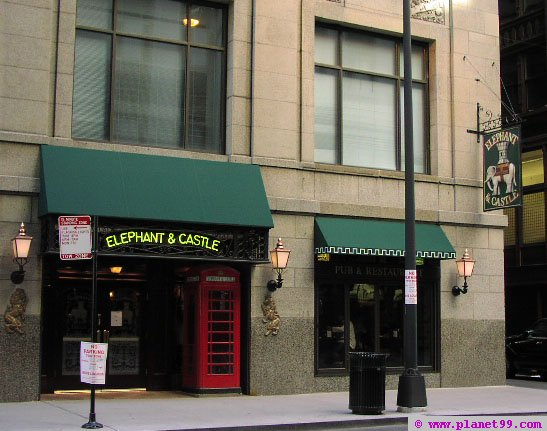
I’m having lunch at the bar in The Elephant & Castle in downtown Chicago because there’s no room in the inn. It’s like trying to find a pew or a parking place on Easter Sunday. I imagine in an hour or two when the lunch crowd goes back to work things will settle down but by then I’ll be Texas bound and taking my ya’ll out of cold storage. Unlike the E&C at lunch time and church last week there’ll be plenty of open seats on the second Sunday of Easter, liturgically labeled low Sunday. It might cause one to lament or at least long for more but the lessons for Easter 2 remind us that Easter is less about lilies and more about everyday living. The disciples living into the message of Jesus rejoice that they are worthy of persecution. The psalmist can’t be silent and along with clanging cymbals and trumpet sound everything that has breath is playing in the band. For John, exiled and in chains the end of the story written at its beginning makes his life and the lives of his people bearable despite hardships. And for us as for Thomas, living between doubt and faith, seeing is believing and believing is life whether pews are empty or full.
Thursday, April 8, 2010
Easter 2c - John 20:19-31
Lincoln Park, Chicago (Last week according to Chicagoans)
I’d been looking forward to running through Lincoln Park and along Lake Michigan for a week. The weather forecast was promising and Tuesday when I arrived could not have been more beautiful. I went to sleep anticipating a morning run with the sun but sometime during the night winter woke up. Waiting for the bus in the cold and rain I said to the person next to me, “What happened to spring?”
“You should have been here last week,” was the reply. All day long Chicagoans told me, “You should have been here last week.” Of course I wasn’t here last week, I was in Texas where we know a thing or two about unpredictable weather, so telling me I should have been here when I wasn’t doesn’t warm me up. Thomas missed the resurrection dawn by a week and nothing the disciples said could warm him up. Unless I see and touch the marks of death on a living Jesus I will not believe. Of course seeing is believing and no matter what Jesus says no one believes without seeing something. It is true for us who have not seen as Thomas but have been blessed into faith by the witness of others. In the Word that is living and the meal that is shared and the community gathered to be sent Jesus shows up to be our Lord and our God. Granted there are times when doubt wakes up and for that the memory of a last week when all was well is a reminder that what was true then will be true again, if not in the present then in the resurrection dawn that awaits us all. So this morning under grey skies with borrowed windbreaker and gloves I ran the run I had been thinking about for a week. Of course I remembered it as being warmer, but then, that was last week.
Wednesday, April 7, 2010
Easter 2c - Revelation 1:4-7
I’m blogging from the 29th floor of 1660 LaSalle in the apartment of still Calvary members at heart Keith and Barbara Holm. With a spectacular view of downtown Chicago to the south and Lincoln Park and Lake Michigan just outside the lobby it’s a far cry from my blogging chair at Roots Coffeehouse on Grapevine Highway. John blogging to the seven churches doesn’t have it so good. Exiled from Ephesus he is a prisoner on the island of Patmos at a time when the Romans were beginning to take note of this Jewish sect that worshipped a crucified criminal from Galilee. John the pastor, kept from tending his flock, is writing to encourage them to remain faithful and remember that the end of the story was written at its beginning and despite the hardships and persecutions of the present everything is proceeding according to the plan. In that sense Revelation is as much a pastoral letter as any of Paul’s and speaks to us in the same way. For while we are not persecuted in any sense of the word we are called to remain faithful despite hardship and remember the end of the story was written at its beginning.
Tuesday, April 6, 2010
Easter 2c - Psalm 150
Psalm 150 is the alternate psalm for Sunday. It’s a noisy praise the Lord psalm and if you were at Calvary on Easter it should bring to mind cymbals and tympani and brass that made our singing “Jesus Christ is Risen Today” rise to new heights. Or the strings and woodwinds that brought “Because He Lives” to life. Now I know the human voice can make a joyful noise all by itself –I’ve been to a Church of Christ service – but when it comes to noise the voice can’t compete with a clanging cymbal. The mighty deeds and surpassing greatness of God calls for an orchestra and everything that breathes as well. So if our praise of God is to be worthy of notice, as I suggested yesterday, we’ll have to make some noise. Not clanging cymbals alone, which Paul tells the Corinthians are as useless as noisy gongs without the melody of love, but grateful for God’s goodness and moved by mercy our praise should be a symphony of sound not unlike the roar of Texas Ranger fans yesterday when after nine innings the Rangers finally caged the Bluejays.
Monday, April 5, 2010
Easter 2c - Acts 5:27-41
Acts 5:27-41
For a group of guys who in the Gospels didn’t get it the disciples got going pretty quickly in the book of Acts. With a sound like the rushing of the wind and tongues of flames on their heads and languages not their own they were transformed from confused followers into bold witnesses who rejoiced that they were considered worthy of persecution. How do we enter such a text given that the message which caused such a stir has settled down to become the status quo? It may be that Gamaliel’s advice, ignore them and they’ll go away, accomplished what the Pharisees desired. The church becomes irrelevant to the culture when it is indistinguishable from it. I’m not nostalgic for the days when the Gospel enraged but I would like to rejoice in being worthy of attention. If we tell the truth the journey of the last four days was mostly about us, the respectable church goers, and for many of our neighbors and co-workers and friends and even family it was just another weekend. If Monday happens right on schedule and holy week like Christmas is carefully wrapped and put back on the shelf until next year it will be just another, albeit it busy weekend for us well. But if we were to do something worthy of attention today, speak and act as those who have something worth living and saying then like disciples we would rejoice in being followers who take the lead.
Friday, April 2, 2010
Easter Year C - Conclusion
Isaiah 65:17-25; Psalm 118; 1 Corinthians 15:19-28; Luke 24:1-12
It seems strange to be blogging about Easter on Good Friday but then Easter is the only way this Friday can be called Good. Without resurrection his was just another crucifixion and while Jesus might have attracted a larger crowd it was business as usual for those who did the dirty work of death. So even though the ground shook at his passing as the sun’s light failed and his innocence was proclaimed in the end he was still dead. But in the pregnant pause of the Sabbath while the women wept and the disciples hid and the chief priests and scribes danced a jig the new thing was announced in heaven and cursed in hell for as in Adam all die so in Christ now all are made alive. And so in the pregnant pause of the Sabbath the songs of victory began to be sung by angel choirs while Jesus mocked the one who had tried to tempt but failed to seduce. Isaiah saw it coming. “No more shall they labor in vain or bear children doomed to misfortune for they shall all be blessed by the Lord.” The psalmist saw it coming. “I shall not die but live and declare the works of the Lord” Paul saw it coming.” The last enemy to be destroyed is death.” The women no longer weeping tell the disciples who stop hiding and the chief priests and scribes have to pay the piper and dance to a different tune. It is the idle tale that informs every tale that ever was or ever will be told. “He is not. He is risen!”
Thursday, April 1, 2010
Easter Year C - Luke 24:1-12
I ran ten miles yesterday, not to get to an empty tomb, though after I was finished I went to bed early and slept like the dead. It’s because last week I decided to change my exercise routine and play less racquetball in favor of more running. The trouble was my routine had become routine and my body knew it by heart. Sometimes when you know something by heart it ceases to surprise or in my case stopped a point short of my optimum BMI. “Why do you look for the living among the dead?” was the question the women were asked. A strange question given that they had come looking for the dead, prepared to do the proper thing the Passover had denied them the opportunity to perform and the living was the last thing they expected to find. But now no longer terrified reminded of Jesus’ words they rushed back to those whose hopes and dreams had died with the one they had left all to follow. Without the benefit of dazzling clothes the women’s tale seemed tall at best and according to Luke everyone but Peter was satisfied to continue believing once dead always dead. The story is familiar to those of us who make the church our home and can lose its ability to surprise and have its way with us. That is what it would do given the chance. There are those moments when with dazzling clarity the veil between the present and the future becomes transparent and one can hear the song of the infinite choir and taste the forever feast. In those moments we are transformed from those who expect the living and the dead to stay in their own rooms to those who see dead people living. Not in some ghostly apparition or chill in the room but in bread and wine shared in the present even as it remembers the past and anticipates the future. Joined to Christ in the meal of thanksgiving the women’s idle tale has its way with us and now expecting the unexpected we are united with the dead now living. So you and I, inhabiting bodies not yet worn out can, if only for a moment, imagine the joys that are for them routine.
Subscribe to:
Posts (Atom)