Friday, April 23, 2010

Easter 4c - Conclusion

Acts 9:36-43; Psalm 23; Revelation 7:9-17; John 10:22-30

I was blown into Amarillo yesterday on an American Eagle flight. It was one of those flights that would be fun on a roller coaster but not so much in a plane the size of a mini van. Despite the up and down and side to side we landed safely and not too quickly thanks to the Good Lord and the flight crew. The texts for Easter 4c or Good Shepherd Sunday are about trusting God through turbulence. The widows weeping for Tabitha taken away, rejoice when the Lord through Peter’s “get up!” brings her back. The psalmist is led to places of peace and comfort and plenty through the valley that is dark as death itself. The multitude come out of the great ordeal of starvation and thirst and scorching sun burst into song as sheltered before the throne of the Lamb their suffering and sorrow and tears are wiped away by God. And the sheep secure from being snatched, known by and knowing the Shepherd, are gifted with life eternal where the only turbulence in the air will be from angel wings and countless voices singing.

Thursday, April 22, 2010

Easter 4c - John 10:22-30

John 10:22-30
All of my life has been lived in the church and for the last nineteen years the same church. In that setting what I say and what I mean is the same thing. In my life outside of church I am a citizen of a small city who fourteen years ago was asked by a mayor to run for city council because he thought a preacher could bring peace to a council divided. In that setting I always tried to remember I was a preacher by calling and a politician by default. When in the heat of the moment and the passion of the debate I violated the oath of my higher calling I apologized in public and when possible, made amends in private. I suppose after six terms as a council member I should have left well enough alone but I heard the voice of that mayor in that our city’s politics were in need of a peace maker. Mike Norman of the Star Telegram does not know me as a preacher of the Gospel and in his profession, which I am confident he passionately believes to be truth telling, candidates for mayor only wink at the truth and are suspect for inadvertently misspelling the name of their mentor. It is true and a treasure that the constitution separates church and state but that is not so for sheep of the Shepherd. If we hear and follow the voice of Christ we cannot tell the truth in the church and twist it in the state. If we do we are like those who being plainly told believe themselves to be kept in suspense. But hearing the voice of the Shepherd in the church or the state we are always elected to the way of peace, truth and love and in that election we can never lose.

Wednesday, April 21, 2010

Easter 4c - Revelation 7:9-17


Revelation 7:9-17
The promise to the white robed ones before the throne describes the great ordeal our faith forebears suffered. Indeed, when we make this portion of the letter a prophecy of the imagined future we dishonor the real people who went without food and water as they suffered the scorching sun and the heat of the day. They were mostly slaves and women, the least and the left behind, which is why using the testimony of their tribulation in best selling books and cheesy DVDs by the rich and powerful insults the real people to whom these words were written. Their tears will be wiped away and though we might have much to make us weep the great multitude come out of the great ordeal does not include us. It is not to say we are left out because we happen to live in a time when the empire embraces the church without trying to strangle it. It just means we can’t read about those persecuted and ultimately killed for the faith and make it about us. What is about us, persecuted or not, is that the Lamb at the center of the throne is the Shepherd of every nation and tribe and people and language which means leaving anyone behind is the last thing on the Lord’s mind.

Tuesday, April 20, 2010

Easter 4c - Palm 23


Psalm 23
The promises of Psalm 23; green pastures, still waters, soul restored, right paths followed, comfort and confidence in death’s dark valley, a feast in front of foes, head anointed, cup overflowing, goodness and mercy and a home in the house of the Lord all happen in the statement of surrender, "the Lord is my shepherd." The second statement “I shall not want” happens because of the first. Of course surrendering and not wanting does not come naturally to us. The story of “the fall” is all about not being satisfied with paradise and because the fruit was pleasing to the eye and useful for knowledge attempting an upgrade from creature to creator which introduced a virus that infects us today. We infect this psalm with that virus when we turn the shepherd into a service provider of green pastures and still waters or even the forever home in the Lord’s house. But to surrender to the shepherd is to be satisfied with creature status and trust that the one who comforts us through the valley of the shadow of whatever knows the way. That means green pastures can exist where there is no grass and still waters in the middle of a rushing river and the right path is the one we’re on even as the feast is as much for the foe as it is for us. And when satisfied with the Shepherd with us in what is we slow down so goodness and mercy following catch up and the forever house of the Lord is home today.

Monday, April 19, 2010

Easter 4c - Acts 9:36-43

Peter, the fisherman turned physician, may have been the rock upon which the church was built, but Tabitha was the one who made it work. Devoted to acts of charity, she takes Jesus at his word about the least of these, “when I was naked you clothed me” and does something about it. Her handiwork in the hands of weeping widows is a testimony to her devotion. Remembered well for the good she did Tabitha will be missed. But this is a resurrection story and so like Lazarus and Jairus’ daughter, Tabitha will live to sew again. Luke tells the story as if a person coming back to life when called by name and told to get up happens all the time, even though miracles tend to demand attention and get it. People like Tabitha, devoted to good works and acts of charity, do not and maybe that makes her life of service more of a miracle than sitting up at Peter’s command. The miracle of the church is that despite all of its drawing attention to itself, mostly for the wrong reasons, it still has a Tabitha or two quietly going about being church. A resurrection story is always more about this life then whatever comes next and though we might long for the day when we hear that final “get up” the world would be well served, and maybe even resurrected, by a church devoted to good works and acts of charity.

Friday, April 16, 2010

Easter 3c - Conclusion

Acts 9:1-20; Psalm 30; Revelation 511-14; John 21:1-19
By Easter 3 the lilies have left the building and its back to the familiar for the faithful. Of course the Easter season continues to Pentecost but for all practical purposes the season is all about a day and that day is done and gone. So what now? Those who make their pilgrimage to the pews twice a year return to sleeping in on Sunday. Those who come every week are glad for a parking space and their regular seat in the sanctuary reserved for them again. Those who preached or presided or played the holy week and weekend take some time off to recover and then get back to work. Another Easter put away and it’s back to business as usual because we don’t live with trumpets and tympani in our day to day. But the lessons of Easter 3c point us to something else for while nothing has changed everything is different. Ananias wakes up one morning and finds himself on Straight Street baptizing the one who the day before was breathing murderous threats against him and the apostle who calls himself the least is unleashed on an unsuspecting Gentile world. The psalmist weeping through the night wakes up in the morning to deliverance and hope and healing and puts on a tuxedo and gets to dancing. The lamb who was done for good comes back to life and the world wakes up to angel choirs too numerous to count singing the eternal future. And Peter gone fishing is caught by Christ and confessing, “You know I love you Lord” is forgiven for being a coward in the courtyard, “Feed my sheep and follow me.” So if you think Easter is just a day think again and you might just wake up to the season that lasts forever.

Thursday, April 15, 2010

Easter 3c - John 21:1-19

By the third appearance the disciples have gone back to what they know. “I’m going fishing,” is what you do when your world has been turned upside down and inside out and even though you’ve come through without a scratch you retreat to the security and comfort of the familiar. The rhythm of casting out and hauling in, casting out and hauling in, casting out and hauling in, even if you don’t catch anything, is simple and satisfying and safe. But Jesus just can’t leave them alone and appearing again turns the catch into an object lesson. Cast on the other side even though you’ve been fishing all night with nothing to show for it. Recognition comes with the catch. John wants us to know there were 153 large fish but the more important detail is that the net isn’t torn which is just another sign that what you should expect in the new reality is the unexpected. After breakfast it’s Jesus who goes fishing for the answer that is really a confession. “You know I love you” three times on the beach reverses “I do not know the man” three times in the courtyard and the curses Peter called down upon himself are lifted with the charge to feed and tend and feed . His fishing days are over and what will become familiar in following Jesus will be suffering and death. God still interrupts the familiar of our everyday with the extraordinary in chance encounters that after the fact are encounters clearly not by chance. God enters our everyday in the help and healing of one enduring with another sorrow and suffering so that courage is renewed, hope restored. We see God present in the flock that feeds and tends those whose welcome place of worship has been torn by dissension and strife. In all this we are invited along with Peter to stretch out our hands and be bound to something beyond our own doing and in that even the familiar is always something new.

Wednesday, April 14, 2010

Easter 3c - Revelation 5:11-14

I remember the sound of angels singing in our backyard years ago. They must have been around three and five at the time and from somewhere inside the castle their father built for them they were singing “This is the feast of victory for our God. Alleluia!” That’s the only part they knew so they just sang it over and over again. Maybe that’s the only part we need to know when it comes right down to it. The Lamb who was slain is worthy and has won the victory over death so that songs of rejoicing might spring forth from children and angels alike. To that the living creatures say Amen which means Let it be so. To live into let it be so is to invite the future into the present so that we hear and sing the song in our everyday. Granted it is more difficult when life is anything but playful. In those times the invitation is a prayer and this is the feast is sung through clenched teeth. Which is why it is the only thing we need to know. Despite all the difficulties of the day the battle is done, the final victory won. One day the feast of victory will be for all of us as children playing and singing this is the feast over and over again and the sound of suffering and sorrow will be stilled. And so the memory of angels singing in the backyard in the past enters the present of this morning so that one is reminded of the future. Amen. Let it be so.

Tuesday, April 13, 2010

Easter 3c - Psalm 30


Psalm 30
At least three of the Heinzes are big Dancing with the Stars fans and while we all have our own favorites we do rejoice when someone who can’t dance gets a standing O for effort or entertainment as the case may be. Of course, Lisa will tell you I’m not one to talk. Psalm 30 is a song of deliverance dressed up in joy even I could dance to. Rescued from the foe, helped by healing, brought back from the depths of the pit the psalmist has seen it all. But perhaps the worst of it is understated. “When you hid your face I was dismayed.” Weeping through the night watches the psalmist is clothed in the sackcloth of God’s absence and the moment of God’s anger seems to last a lifetime. Crying into that silence for help the psalmist is not above making a deal. “What good am I to you dead?” When the morning of deliverance comes the rejoicing is unrestrained and one jumps for the joy of it, for even if silence and sorrow and suffering are remembered the new dawn trumps whatever one went through to see the sun rise. So the standing O belongs to God who by dying our death ensured that one day we would dance with the stars, even with two left feet.

Monday, April 12, 2010

Easter 3c - Acts 9:1-20

The street called Straight - Damascus
Saul may be the one blinded, but Ananias is the one who wants to make sure God sees clearly. “Here I am Lord” is followed quickly by a just in case you don’t know “Lord, I’ve heard of this man…” According to Luke’s tale all Ananias needs is a little more information to call Saul brother, but I image he had an exit strategy when he headed down Straight Street in Damascus. Even so his only scene in the Gospel is a story of faith that makes Paul’s possible as his baptizing Saul, Saul, why do you persecute me means Paul can suffer for the sake of the name which in turn makes the name of Jesus known. We don’t have nearly as much at stake on either side of the story but there are those times when we are willing yet reluctant witnesses. My blogging was interrupted by one of those chance encounters that you realize after the fact was too much of an encounter to be a chance. Baptized by the spirit of shared story the one who interrupted me was the one whose journey was interrupted with the chance that healing may happen. Ananias could have said send someone else but he didn’t. Maybe God seeing clearly is how we receive our sight. Here I am Lord.

Friday, April 9, 2010

Easter 2c - Conclusion

Acts 5:27-41; Psalm 150; Revelation 1:4-7; John 20:19-31
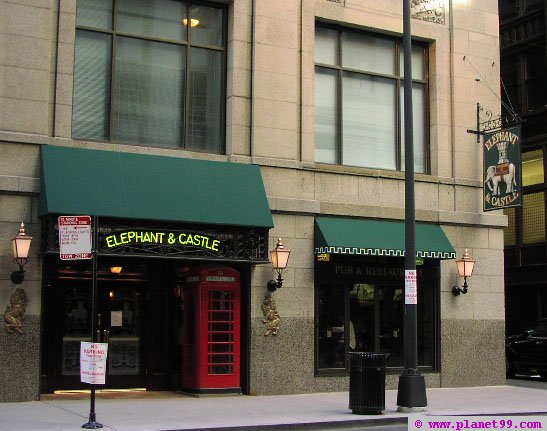
I’m having lunch at the bar in The Elephant & Castle in downtown Chicago because there’s no room in the inn. It’s like trying to find a pew or a parking place on Easter Sunday. I imagine in an hour or two when the lunch crowd goes back to work things will settle down but by then I’ll be Texas bound and taking my ya’ll out of cold storage. Unlike the E&C at lunch time and church last week there’ll be plenty of open seats on the second Sunday of Easter, liturgically labeled low Sunday. It might cause one to lament or at least long for more but the lessons for Easter 2 remind us that Easter is less about lilies and more about everyday living. The disciples living into the message of Jesus rejoice that they are worthy of persecution. The psalmist can’t be silent and along with clanging cymbals and trumpet sound everything that has breath is playing in the band. For John, exiled and in chains the end of the story written at its beginning makes his life and the lives of his people bearable despite hardships. And for us as for Thomas, living between doubt and faith, seeing is believing and believing is life whether pews are empty or full.

Thursday, April 8, 2010

Easter 2c - John 20:19-31


Lincoln Park, Chicago (Last week according to Chicagoans)
I’d been looking forward to running through Lincoln Park and along Lake Michigan for a week. The weather forecast was promising and Tuesday when I arrived could not have been more beautiful. I went to sleep anticipating a morning run with the sun but sometime during the night winter woke up. Waiting for the bus in the cold and rain I said to the person next to me, “What happened to spring?”
“You should have been here last week,” was the reply. All day long Chicagoans told me, “You should have been here last week.” Of course I wasn’t here last week, I was in Texas where we know a thing or two about unpredictable weather, so telling me I should have been here when I wasn’t doesn’t warm me up. Thomas missed the resurrection dawn by a week and nothing the disciples said could warm him up. Unless I see and touch the marks of death on a living Jesus I will not believe. Of course seeing is believing and no matter what Jesus says no one believes without seeing something. It is true for us who have not seen as Thomas but have been blessed into faith by the witness of others. In the Word that is living and the meal that is shared and the community gathered to be sent Jesus shows up to be our Lord and our God. Granted there are times when doubt wakes up and for that the memory of a last week when all was well is a reminder that what was true then will be true again, if not in the present then in the resurrection dawn that awaits us all. So this morning under grey skies with borrowed windbreaker and gloves I ran the run I had been thinking about for a week. Of course I remembered it as being warmer, but then, that was last week.

Wednesday, April 7, 2010

Easter 2c - Revelation 1:4-7

I’m blogging from the 29th floor of 1660 LaSalle in the apartment of still Calvary members at heart Keith and Barbara Holm. With a spectacular view of downtown Chicago to the south and Lincoln Park and Lake Michigan just outside the lobby it’s a far cry from my blogging chair at Roots Coffeehouse on Grapevine Highway. John blogging to the seven churches doesn’t have it so good. Exiled from Ephesus he is a prisoner on the island of Patmos at a time when the Romans were beginning to take note of this Jewish sect that worshipped a crucified criminal from Galilee. John the pastor, kept from tending his flock, is writing to encourage them to remain faithful and remember that the end of the story was written at its beginning and despite the hardships and persecutions of the present everything is proceeding according to the plan. In that sense Revelation is as much a pastoral letter as any of Paul’s and speaks to us in the same way. For while we are not persecuted in any sense of the word we are called to remain faithful despite hardship and remember the end of the story was written at its beginning.

Tuesday, April 6, 2010

Easter 2c - Psalm 150


Psalm 150 is the alternate psalm for Sunday. It’s a noisy praise the Lord psalm and if you were at Calvary on Easter it should bring to mind cymbals and tympani and brass that made our singing “Jesus Christ is Risen Today” rise to new heights. Or the strings and woodwinds that brought “Because He Lives” to life. Now I know the human voice can make a joyful noise all by itself –I’ve been to a Church of Christ service – but when it comes to noise the voice can’t compete with a clanging cymbal. The mighty deeds and surpassing greatness of God calls for an orchestra and everything that breathes as well. So if our praise of God is to be worthy of notice, as I suggested yesterday, we’ll have to make some noise. Not clanging cymbals alone, which Paul tells the Corinthians are as useless as noisy gongs without the melody of love, but grateful for God’s goodness and moved by mercy our praise should be a symphony of sound not unlike the roar of Texas Ranger fans yesterday when after nine innings the Rangers finally caged the Bluejays.

Monday, April 5, 2010

Easter 2c - Acts 5:27-41

Acts 5:27-41
For a group of guys who in the Gospels didn’t get it the disciples got going pretty quickly in the book of Acts. With a sound like the rushing of the wind and tongues of flames on their heads and languages not their own they were transformed from confused followers into bold witnesses who rejoiced that they were considered worthy of persecution. How do we enter such a text given that the message which caused such a stir has settled down to become the status quo? It may be that Gamaliel’s advice, ignore them and they’ll go away, accomplished what the Pharisees desired. The church becomes irrelevant to the culture when it is indistinguishable from it. I’m not nostalgic for the days when the Gospel enraged but I would like to rejoice in being worthy of attention. If we tell the truth the journey of the last four days was mostly about us, the respectable church goers, and for many of our neighbors and co-workers and friends and even family it was just another weekend. If Monday happens right on schedule and holy week like Christmas is carefully wrapped and put back on the shelf until next year it will be just another, albeit it busy weekend for us well. But if we were to do something worthy of attention today, speak and act as those who have something worth living and saying then like disciples we would rejoice in being followers who take the lead.

Friday, April 2, 2010

Easter Year C - Conclusion

Isaiah 65:17-25; Psalm 118; 1 Corinthians 15:19-28; Luke 24:1-12
It seems strange to be blogging about Easter on Good Friday but then Easter is the only way this Friday can be called Good. Without resurrection his was just another crucifixion and while Jesus might have attracted a larger crowd it was business as usual for those who did the dirty work of death. So even though the ground shook at his passing as the sun’s light failed and his innocence was proclaimed in the end he was still dead. But in the pregnant pause of the Sabbath while the women wept and the disciples hid and the chief priests and scribes danced a jig the new thing was announced in heaven and cursed in hell for as in Adam all die so in Christ now all are made alive. And so in the pregnant pause of the Sabbath the songs of victory began to be sung by angel choirs while Jesus mocked the one who had tried to tempt but failed to seduce. Isaiah saw it coming. “No more shall they labor in vain or bear children doomed to misfortune for they shall all be blessed by the Lord.” The psalmist saw it coming. “I shall not die but live and declare the works of the Lord” Paul saw it coming.” The last enemy to be destroyed is death.” The women no longer weeping tell the disciples who stop hiding and the chief priests and scribes have to pay the piper and dance to a different tune. It is the idle tale that informs every tale that ever was or ever will be told. “He is not. He is risen!”

Thursday, April 1, 2010

Easter Year C - Luke 24:1-12

I ran ten miles yesterday, not to get to an empty tomb, though after I was finished I went to bed early and slept like the dead. It’s because last week I decided to change my exercise routine and play less racquetball in favor of more running. The trouble was my routine had become routine and my body knew it by heart. Sometimes when you know something by heart it ceases to surprise or in my case stopped a point short of my optimum BMI. “Why do you look for the living among the dead?” was the question the women were asked. A strange question given that they had come looking for the dead, prepared to do the proper thing the Passover had denied them the opportunity to perform and the living was the last thing they expected to find. But now no longer terrified reminded of Jesus’ words they rushed back to those whose hopes and dreams had died with the one they had left all to follow. Without the benefit of dazzling clothes the women’s tale seemed tall at best and according to Luke everyone but Peter was satisfied to continue believing once dead always dead. The story is familiar to those of us who make the church our home and can lose its ability to surprise and have its way with us. That is what it would do given the chance. There are those moments when with dazzling clarity the veil between the present and the future becomes transparent and one can hear the song of the infinite choir and taste the forever feast. In those moments we are transformed from those who expect the living and the dead to stay in their own rooms to those who see dead people living. Not in some ghostly apparition or chill in the room but in bread and wine shared in the present even as it remembers the past and anticipates the future. Joined to Christ in the meal of thanksgiving the women’s idle tale has its way with us and now expecting the unexpected we are united with the dead now living. So you and I, inhabiting bodies not yet worn out can, if only for a moment, imagine the joys that are for them routine.

Wednesday, March 31, 2010

Easter Year C - 1 Corinthians 15:19-28

The day of resurrection is only five days away when the faithful will gather in the sanctuary in Arlington, TX to hear the word of life, “Play ball!” I don’t doubt there will be in attendance a good number whose hope has less to do with what happens on Sunday and more to do with the Ranger's season that begins Monday afternoon at The Ballpark. Perhaps they are most to be pitied, except for Cub fans, of course. Don’t get me wrong, the only opening day I’ve missed since 1994 was the year it fell on Good Friday which just goes to show how little Holy Week matters to MLB. But then we are living in the post-Christian era and not because we are in the end times but because in changing times the church forgot to remain the same. By that I mean to remember that the Good News was always simple and meant to be free of unnecessary encumbrances (like laws about food and festivals and circumcision?) lest the Gospel be held in bondage to human tradition. The Good news is Christ died and was raised from the dead so that the world should not be pitied for hoping in something less, something that cannot resolve the question of our opening day that leads inevitably to our closing day. Born into this world without being consulted, some will face it sooner than others but in the end as my seminary professor, Walter Bouman, liked to say, “The death rate is still one per person.” The Gospel begins and ends with what Jesus for the world did on a Friday afternoon, dying every death, for us, ahead of us so that death would not be the last thing to be said about anyone. If death is not the last thing to be said then life can be lived without the fear associated with one’s inevitable end and that is where we have a choice. Not a choice to turn Jesus being raised into a system of reward and punishment that depends on getting a ticket as hard to come by as box seats on Opening Day, but a choice to live this life for others as Jesus did, trusting that in the end God was and is and will be all in all. “Play ball!”

Tuesday, March 30, 2010

Easter Year C - Psalm 118

On the morning of May 25th 2000 I was sitting in my brother’s backyard in Chicago drinking way too much coffee and nervously waiting for inspiration. Months before I promised my dad I’d write a song for my grandmother’s memorial service. At that point all I had was “I hope” which was how Grandma Heinze described faith in Jesus. Not “I hope” as in “I wish” but “I hope” as in “I know.” So with grandma’s faith in Jesus on my mind I waited impatiently for a song that was scheduled to be sung that afternoon. And then I remembered a funeral the week before where I spoke the words of Psalm 118. “There are shouts of exaltation in the tents of the righteous for the strong arm of the Lord has triumphed" and within ten minutes I had three verses and a chorus in the key of E and a few hours later “Our Hope” was sung as promised. Of all the parts of the funeral liturgy Psalm 118, appointed to be read at the graveside, seems to fly in the face of reason. When it is obvious that our loved one has fallen and is not getting up again we claim that “I shall not die but live and declare the works of the Lord.” But that is the way of faith where the stone the builders rejected becomes the cornerstone of “I hope.” Defeat is victory, loss is gain, and sorrow is prelude to joy. While it seems like the truth of “I hope” comes to us as suddenly as it did to me in my brother’s backyard the truth is the only thing sudden about it is that it is the end of waiting. It took Martha sometime to learn the song of Jesus but when she did she sang it with everything she had for her best friend, Jesus. And so like Timothy whose faith first lived in his grandmother Lois the faith of Martha is sung every Easter at Calvary Lutheran, Richland Hills, TX in three verses and a chorus in the key of E.

Monday, March 29, 2010

Easter Year C - Isaiah 65:17-25

Isaiah 65 is the alternate reading for Easter or the pitch hitter for Acts 10. No offense to Luke but given the choice I think even Jesus would choose Isaiah. Granted he never read Acts but he did choose Isaiah 61 as the text for his first sermon in Nazareth, even if it did end badly (they tried to throw him off a cliff). His faithfulness brings forth the justice of Isaiah 42. He is light for the Gentiles as he gathers Israel in Isaiah 49. In Isaiah 50 he has been given the tongue of the teacher to sustain the weary. He is the servant described in Isaiah 53; a man familiar with suffering and aquatinted with grief by whose stripes we are healed. And so given the choice I’m going with Isaiah 65. That’s not only a liturgical decision but a choice of what future informs our present. Is that future a rerun of the old or is it something so new the old cannot even be recalled? All I know is that when I think of the alternate vision where few are taken and the vast majority is left behind, where a personal relationship with Jesus is a password to paradise and everyone else can go to hell it feels a lot like the world I live in today. I want God’s future to be more than that and when I read Isaiah I get a sense that we’ll all be surprised. But how can we say that given all the Biblical evidence to the contrary? We can’t, but we can hope. That’s all. A hope that even though it seemed to end badly for Jesus when God made a choice to do something different on a Friday we call Good it really was a brand new thing.