
Someone in the crowd was trying to triangulate Jesus, who knows a thing or two about healthy relationships between three persons. “Tell my brother to divide the family inheritance” sounds like a sibling rivalry with a little history. Who knows, maybe Jesus’ well known tale about two sons and a loving father comes from a chance encounter in the crowd with a real life prodigal. Of course Jesus does not take the bait (he never does) but speaking the truth in love goes to the heart of the matter. You have placed possessions in front of people, which is the definition of greed. To seal the deal he tells the story of a rich man who appears to be acting prudently. Crops not stored properly will quickly turn into cr@p, if you know what I mean. So it makes perfect sense to build bigger barns and enjoy the fruit of your labor, after all that is the reward of hard work and sound investments. But then this is a parable and the details are not to be dissected because it’s all about the punch line and in this case the punch line is a Jesus’ twist on prosperity. You can’t take it with you when you go and living as if you can is foolish. The lesson is for the “someone” in the crowd although we are clearly meant to apply it to our own life. Your brother is more important than dividing the inheritance and the way one is rich toward God has everything to do with the value of our relationships in the here and now, even with brothers (or sisters) who won’t share.
Friday, July 29, 2022


Thursday, July 21, 2022
Lectionary 17 C - Luke 11:1-13

“Teach us to pray, as John taught his disciples.” Praying was not new to the disciples who as Jews would have done so religiously three times a day so this request has more to do with Jesus than a lesson in proper prayer posture. It’s like asking for the secret handshake, the visible, or in this case, verbal cue that the ones praying belong to the Jesus club. But instead of an exclusive club (we want our own prayer) Jesus begins with a new naming of the God whose name could not be spoken (lest ye die!) as Our Father. Everything that follows, including the parable and the seeking, finding, knocking as well as evil parents knowing the difference between eggs and scorpions, has to do with this naming of God as Father, or better, parent. The “Our Father” is not about gender but genetics. The kingdom come, the asking for daily bread, the being forgiven and forgiving, the temptation from which one is spared all depend on trusting the truth of “Our Father”. And one cannot trust the truth of God as Father unless one acknowledges the Father as “Our” which means we who belong to God belong to each other. (ala Sister Sledge “We Are Family” 1979) When we live “Our” while trusting God as “Father” the kingdom comes, bread is shared, we are forgiven and forgive and the time of trial is not avoided but overcome. And to that let all God’s children say, “Amen!”
Wednesday, July 20, 2022
Lectionary 17 C - Colossians 2:6-19

The rulers and authorities intended to make a public example of Jesus by nailing him to a cross. But what rulers intended for evil God intended for good and in the ultimate irony the shame of the cross is its glory. Those who killed Jesus according to the demands of the law could not foresee that condemning Christ would fulfill it. We who are not overly concerned with circumcision or keeping kosher or observing festivals must none-the-less admit our tendency to prefer the rules and regulations of religion, if only for the regiment they bring to what otherwise seems too good to be true or too simple to be of much use. Each tradition claims Christ and disagreements about perceived fundamentals of faith lead one to dismiss the other as misguided or misinformed or sadly mistaken. But if God set aside the requirements of kosher and circumcision and Sabbath without a substitution save one, then maybe that’s the only thing we have to hold onto to remain rooted and built up and established in the God who is Love.
Tuesday, July 19, 2022
Lectionary 17 C - Genesis 18:20-23

Sodom and Gomorrah by Henry Tanner 1920-4
Abraham does not dispute the wickedness of Sodom and Gomorrah or the punishment God has planned for the twin sin cities. Abraham’s concern is for the collateral damage caused by God’s righteous wrath which must in his mind include his nephew Lot and Lot’s family. Each proposal preceded by “Far be it from you” asks God to reconsider the just sentence on the wicked for the sake of a diminishing population of the righteous. He stops at ten because he either senses he’s gone as far as God will go or he can’t imagine there would be less than ten righteous people in the cities on the plain. Unfortunately for the wicked there are only four who are counted as righteous, although the character of Lot’s "turning back" wife turned to salt is questionable. And Lot’s daughters prove to be as sinful as Sodom (Genesis 19:30-36) while Lot drunk in a cave is no saint. So what if no one is righteous? What then? What Abraham didn’t know and we can hardly imagine is that God’s desire was that mercy would triumph over judgment for it is God’s will to be both just and the one who justifies. (Romans 3:26) So since none were found, God in Christ became the One through whom we are counted righteous and who knows, might also be the ones for whose sake the city is spared.
Friday, July 15, 2022
Epiphany 16 C - Luke 10:38-42

Martha is distracted by her many tasks because truth is without her they won’t get done. Luke doesn't tell us what the many tasks are but I imagine they have something to do with a house full of freeloaders. Not the Lord, mind you. Martha was happy to have Jesus over for a visit. It was all those fisher folk and tax collectors who came with him. Food has to be prepared. The table has to be set. The good silverware has to be polished and counted – because you can’t trust Galileans not to walk off with a fork or three. At any rate there are things to be done and Martha is the only one doing them. It may be that Martha is often distracted by many tasks but if that’s the case maybe Mary spends a lot time sitting and not helping. I know that is not the point of the story but what if everyone chose the better part? Who would wash the dishes? So if Mary was listening closely to Jesus she might hear him say, “I came not to be served but to serve” and get up and help her sister. And then maybe Martha might have a chance to hear Jesus say, “do not be anxious about your life…” and sit down at the feet of Jesus.
Wednesday, July 13, 2022
Lectionary 16 C - Psalm 15

Abiding in the tent of the Lord is not a reward for those who walk blamelessly or do what is right. Doing what is right is how you abide in the Lord. Dwelling on the Lord’s holy hill is not a reward for speaking the truth. Speaking the truth is the language of the holy hill where there is no translation for slander and evil. That is because the language of the holy hill is love written by the life of the One who stood by his oath, even to his hurt, who offered himself to all of humanity without demanding payment or interest and who though innocent died for those who live by bribes.
Tuesday, July 12, 2022
Lectionary 16 C - Genesis 18:1-15

Thursday, July 7, 2022
Lectionary 15 C - Luke 10:25-37

Vincent Van Gogh - The Good Samaritan - 1890
When parables become proverbial they lose their primary means of instruction which is a classic bait and switch. The lawyer testing Jesus is himself tested by the parable and forced to acknowledge the Samaritan as a neighbor, though he can’t bring himself to state it outright. “I suppose it was the one who showed mercy.” On the other hand as long as the Good Samaritan stays a story it hardly matters, even for the lawyer who passed Jesus’ test while failing his own. The “go and do likewise” is the real point of the parable and only makes a difference if those who no longer seek to justify themselves act more like the Samaritan and less like the priest or Levite. Which means we can recast the story with a Lutheran pastor, a medical doctor and any member of a despised class or race and unless we “go and do likewise” the parable has no point in being recast or retold. But if in hearing his own voice naming the neighbor the lawyer is moved to stop acting like a priest or Levite who caring more about the bloodied man than remaining ritually pure stop to do what the Samaritan does then the parable is more than just a clever ruse to convict a lawyer. For those justified by Jesus and no longer surprised by the plot twist or fooled by the bait and switch the story is an invitation to “go and do likewise” and in so doing just maybe put the punch back in the parable.
Wednesday, July 6, 2022
Lectionary 15 C - Colossians 1:1-14

Paul makes fruit bearing sound easy but truth to be told even if worms and blight don’t destroy fruit fully grown it takes cooperation of sun and soil and water just to get the tree to bud and the bud to flower. The fruit that we enjoy comes from supermarket aisles, washed and polished, neatly displayed and far removed from the labor that produced and packaged what we take for granted. And so the fruit of faith might be better understood if we were closer to its origin which of course is what Paul is praying for. The Colossian Christians have truly comprehended the grace of God which means they understand that the fruit of faith has little to do with them and everything to do with the One who has rescued them from the power of darkness and transferred them to the kingdom of Christ. A life worthy of the Lord, fully pleasing, is a life that recognizes and gives thanks for faith fully grown and supermarket ready, no thanks to our abilities but wholly dependent on the cooperation of Son and Spirit and Baptismal water.
Tuesday, July 5, 2022
Lectionary 15 C - Psalm 25:1-10

Psalm 25:1-10
The psalmist trusting in the Lord prays for God’s great love and mercy from of old to be remembered so that youthful sin and rebellious ways might be forgotten. While the Lord remembering us in love erases the memory of our rebellion we do not easily forget our own folly or foolishness or willful acts of insolence and indulgence. Memories as fresh as the day they were recorded return accusing and condemning bringing guilt and shame. The enemy that triumphs over me lives in my own heart and mind as I remember what God has forgotten as if God still holds it against me. Forgiveness freely offered is never fully received as long as I continue to hold myself accountable for the sin God forgot long ago. Since the way of the Lord is first and foremost forgiveness the instruction of the sinner begins with trusting the Lord, faithful and loving, and in doing so forgiving self. It does not mean forgive and forget which I think is beyond our ability, or at least mine. What we can do is remember forgiveness whenever we remember what God has forgotten and in so doing be finally free from youthful sins and rebellious ways.
Monday, July 4, 2022
Lectionary 15 C - Deuteronomy 30:9-14

If the ancestors God delighted in prospering were Abraham, Isaac & Jacob they reaped the benefits of God’s benevolence before the commandments and decrees were written into the book of the law. As it is written, “Abraham believed and it was credited to him as righteousness.” (Genesis 15:6) If that was true for them then turning to God with heart, mind and soul is not first and foremost about behavior but belief. As long as we think of observing commands as something we have to do “thou shalt not” will always be too hard and far from us. But Jesus abandoned heaven and for our sake crossed the sea of sin and death to bring the Word, his very presence, near to us. It is the heart drawn to God, the mind mesmerized by love, the soul resting secure in peace that makes observing the commands as close as your own breath. It is the love of Christ that compels us to observe God’s commands not as something we have to do but as an expression of who we are as those who live and breathe the law of love.
Thursday, June 30, 2022
Lectionary 14 C - Luke 10:1-11; 16-20

To be sent out with no purse or provisions as lambs into the midst of wolves doesn’t sound so promising unless the success of the mission does not depend on the missionary. In fact, the kingdom of God comes near the house that welcomes peace and the house with the “No Soliciting” sign. Where the kingdom is recognized healing happens. Where it is not recognized the kingdom stands as a sentence against the shortsighted as they are left to their own devices which are always less than what the kingdom offers. The dust shaking judgment anticipates the woes in the verses the lectionary leaves out. It is a litany of losers, where even sin city Sodom is better off “in that day” than the cities who choose not to welcome peace. But even those who proclaim peace don’t quite recognize the kingdom come near for they rejoice not in the name of Jesus but in the power they wield with his name. Jesus redirects their joy from submitting spirits to their names written in the final kingdom come. And if the one despised and rejected, the Lamb who led to the slaughter and before his shearers was dumb, is the one who writes the names recorded in heaven maybe there is hope even for the litany of losers?
Wednesday, June 29, 2022
Lectionary 14 C - Galatians 6:1-16
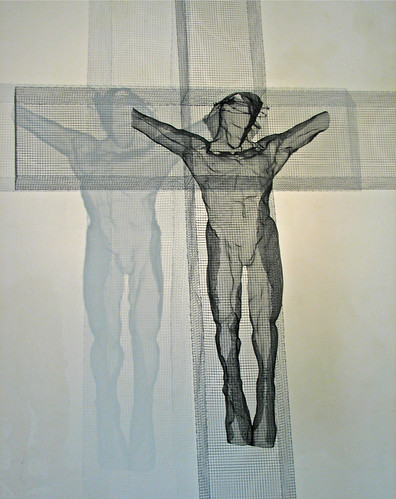
Jesus said, “If you love only those who love you what good is that to you? Even the pagans do that.” Which means to fully fulfill the law of Christ one must bear the burden of those who you are quite happy to see weighed down. In which case the law of Christ cannot be fulfilled unless you bear the burdens of “those who want to make a good showing in the flesh” in the same way you "do not grow weary in doing what is right” for those “who follow this rule.” Maybe the apostle Paul was too close to the conflict to apply his own instruction about gently restoring those who by their transgression troubled him so. Of course it is true of our time as well when well meaning people passionate about defending the faith as they understand it violate its first principle. Love is the law of Christ. Is it any wonder that those outside the faith grow weary of our witness? If we are to be the body of Christ then to be crucified “to the world” is to be crucified for the world. When we argue over doctrine and dogma and in defending the Gospel fail to live it we are no longer defending the Gospel but violating it. Does it mean that anything goes and there are no truths to be taught? No. But if the fullest expression of the truth is love then love determines how all lesser "truths" are taught, which means Paul might have to recant his wish that “those agitators go the whole way and emasculate themselves!” (Galatians 5:12) Oy Vey!
Tuesday, June 28, 2022
Lectionary 14 C - Psalm 66:1-9

Psalm 66 praises the awesome works of God remembering the rescue through the sea when escaping from Egypt the children of Israel were trapped between an army and a wet place. It is the story told time and again down through the centuries. Remember that you were slaves in Egypt and the Lord heard your cry and with a mighty arm rescued you from Pharaoh’s grasp bringing you to a land flowing with milk and honey. While it is remembered with shouts of joy and singing it is also the story told when the milk has gone sour and the honey runs out, when enemies are all around, when life hangs in the balance and feet are on unsteady ground. When all seems hopeless remembering in the present the providence of God in the past is how one gets through today and into tomorrow. It is remembering God’s faithfulness that preserves the life that is essential, the life of hope. It is remembering God’s mercy that places the feet of faith on the solid ground of trust. And so we remember the awesome work of God on our behalf, not a passing through the sea on dry land, but God in human flesh passing through the sea of sorrow and suffering and death. In the tomorrow that will be the day that never ends the enemy that will cringe before God will be death itself which like the chariots of Pharaoh will be swallowed up in the sea of victory.
Monday, June 27, 2022
Lectionary 14 C - Isaiah 66:10-14

Isaiah 66:10-14
Isaiah’s vision of the exile’s return to Jerusalem to be nursed and carried on her arm and dandled on her knees was not realized even by the rejoicing of the returning exiles reclaiming the Promised Land because of the opposition and violence and bloodshed that greeted them. (Ezra 4) In our time devout Jews gather at the Wailing Wall to pray for the restoration of the temple as Palestinian Christians weep at walls that surround and separate them from the part of the Promised Land that is their home and all the while God weeps over the plight of all people who love Jerusalem. But in the dream of God’s design those who rejoice in her and those who mourn because of her will both be comforted by her. In the dream of God’s design Jerusalem is for all people a place of peace where the feast that never ends will begin. It may be that we have to do more than pray for the peace of Jerusalem for the dream of God’s design to come true, but not by denying the right of Jewish people to live in safety or by denying the plight of the Palestinian people imprisoned in their own land. The hatred that exists and is the cause of such suffering will only be overcome when each sees in the other the dream of God’s design.
Friday, June 24, 2022
Lectionary 13 C - Luke 9:51-62

Either the disciples are accustomed to calling down fire on folks or they’re blowing smoke. I’m voting for the latter. But then church folk do get a little hot under the collar when what they believe to be sacred is not well received. Jesus puts out their passion for revenge (and ours?) with a rebuke and the narrative continues with three "on the road" sayings. The cost of following Jesus will be high. No home. No time to bury the dead. No turning back. We tend to have an easier time of it and even if we make sacrifices we are not without the comforts of home or time to mourn or take care of business before doing whatever it is God has called us to do. So we are either “not fit for the kingdom of God” or the text does not apply to us. I’m going to opt for a middle way aka the Lutheran solution. We may indeed have comfortable places to lay our heads and take time to bury our dead and say farewell before following but being fit for the kingdom depends wholly on the One who had the power to call down fire on rude Samaritans but did not. So what might seem as an absolute (…not fit for the kingdom) is actually a rebuke and a rebuke is correction not rejection. And in the Lutheran solution the rebuke of the law always leads one to cling more firmly to the Gospel which is the only way we are ever fit for the kingdom of God.
Wednesday, June 22, 2022
Lectionary 13 C - Galatians 5:1, 13-25

Self-indulgence comes in many forms and even the perfectly pious can be bound by it. Granted the more obvious forms are found in Paul’s long list of the fleshly fruits but self-righteousness is just as limiting and destructive as licentiousness. So those who indulge the more carnal desires sell themselves short and pay dearly for what appears to be living large. Those who do not indulge the flesh but are intoxicated with pride biting and devouring one another also pay dearly for the illusion of freedom and do not experience the true fruits of the pious life. But the freedom for which we have been set free is to be in relationship with one another and all people in the same way that Jesus freely loved and gave himself up for the sake of the world. Now it may appear that having one’s hands and feet fastened to wood is the opposite of freedom but that is the way of God who chooses to be emptied that we might be filled. If freedom is defined by living the fruit of the Spirit list then it doesn't matter if you are behind bars or nailed to a cross. So we crucify the desire that would drive us insane as well as the passion to control everyone else for the sake of being free to be bound to others.
Thursday, June 16, 2022
Lectionary 12 C - Luke 8:26-39

Wednesday, June 15, 2022
Lectionary 12 C - Psalm 22:19-28

Psalm 22 begins with the absence of God but ends with assurance as the one who cries “My God, My God why have you forsaken me?” is confident that the Lord "not hidden" has listened to the cry for help. It is the absolute honesty of the psalms of lament that allows them to end on a note of praise. In a way they are liturgical venting, the psalmist’s heart poured out in questioning and complaint. It does not mean the condition that prompts the cry of dereliction is resolved but that voicing the complaint, an act of faith, restores the strength that is sapped and renews the confidence that is shaken. That is true for the laments of our lives which is why the psalms are the place we go when trouble surrounds us and deliverance seems far off. It is why this psalm sprung forth from the mouth of Jesus as he hung on the cross and while the witnesses of the crucifixion only heard the first verse, “My God, my God…” Jesus knew the psalm ends with rejoicing even as the cross was prelude to resurrection. So too with us, for Jesus overcame pain and sorrow and suffering and the darkness of death so that all our laments would end in praise.
Tuesday, June 14, 2022
Lectionary 12 C - Isaiah 65:1-9

Subscribe to:
Posts (Atom)